State
Instructions to make Seva Sankalp Abhiyan a massive public participation campaign
Chief Secretary held a video conference with the collectors
Reviewed the activities conducted under the Seva Sankalp Abhiyan
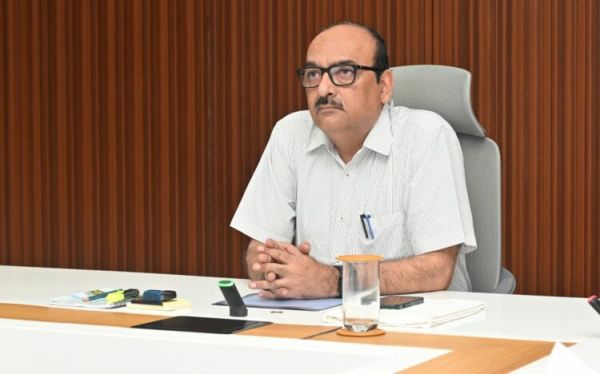
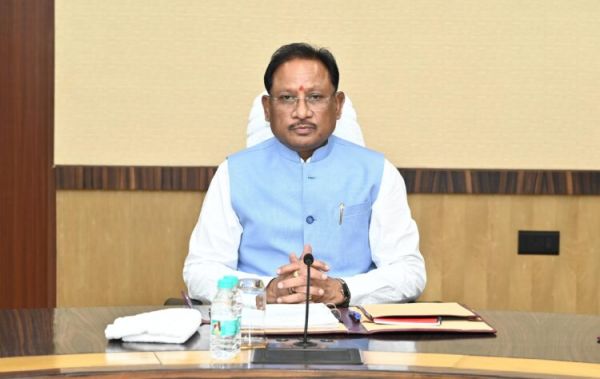
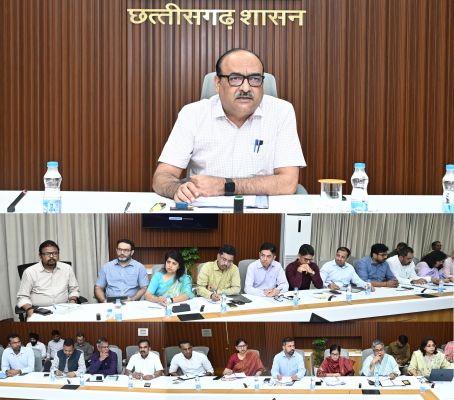
Raipur, September 21, 2026/ Under the chairmanship of Chief Secretary Shri Vikasshiil, the activities conducted under the Seva Sankalp Abhiyan were reviewed through video conference with the collectors of all the districts of the state from Mantralaya Mahanadi Bhawan here today.
The Seva Sankalp Abhiyan is being conducted in the state from September 17th to October 17th, 2026. During the video conference, the Chief Secretary stated that the Seva Sankalp Abhiyan should not be viewed merely as an event, but as an opportunity to strengthen public participation and a culture of mutual help. He directed collectors and officials to effectively organize the campaign's activities in the districts, ensuring the participation of as many people, voluntary organizations, and social organizations as possible.
The Chief Secretary told the collectors that under the guidance of the Minister in-charge in the districts, their problems should be resolved quickly by making people partners in the camps organized during the Seva Sankalp Abhiyan at the block and tehsil level. In this regard, ensure necessary meetings and discussions with the honorable ministers. The Chief Secretary said that 26 major schemes identified by the Central Government are to be included in the camps. In this regard, the information of the beneficiaries of the schemes should be updated. The Chief Secretary gave necessary guidelines to the collectors regarding the works of Crop Girdawari Survey, Jal Jeevan Mission and Swachh Bharat Mission.
Various activities under Seva Mera Yojnad
Various activities will be organized under the "Seva Mera Yogdan" campaign from September 23rd to 25th in the urban areas of all districts, and from October 2nd to 8th across the state. These include activities such as service and cleanliness, food and clothing donation, education donation and educational support, skill and knowledge donation, green Chhattisgarh and environmental protection, health and blood donation, organ donation and body donation, social security and awareness, and local production and women empowerment. The Chief Secretary said that the active participation of NCC, NSS, volunteers, self-help groups, social organizations, youth organizations, and various partner organizations, including "Mera Yuva Bharat," should be ensured in these activities. Instructions were given to upload all activities, along with photographs, on the My Bharat portal.
Families who donate their bodies and organs should be honored.
The Chief Secretary has asked the collectors to honor the families whose deceased relatives donate their bodies and organs. The Chief Secretary said that the families of those whose donated organs were used should also be included in the program and their immediate feedback should be taken. To ensure that this program is not limited to just a campaign, more awareness programs should be organized from time to time, so that people are willing to donate organs and come forward.
10,000 saplings will be planted by incorporating 'Green Chhattisgarh Campaign with 'Ek Ped Maa Ke Naam'.
Under the "One Tree in the Name of Mother" initiative, a Green Chhattisgarh campaign aims to plant 10,000 trees of local species. The Chief Secretary directed to ensure widespread public participation in activities related to environmental protection.
Mushroom and Mahua business changed Babli's life
Bihaan gave a boost, confidence strengthened by the schemes of the Sai government
Ground picture of Prime Minister Shri Narendra Modi's vision of making women self-help groups self-reliant
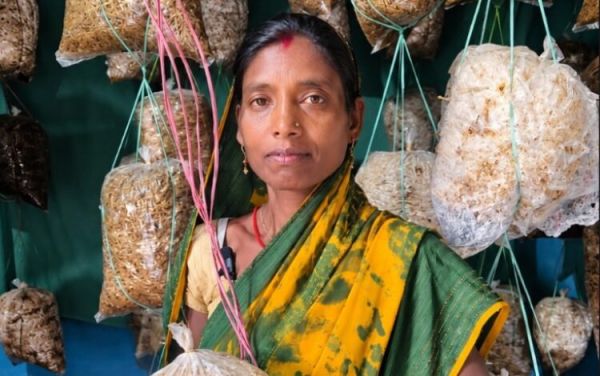
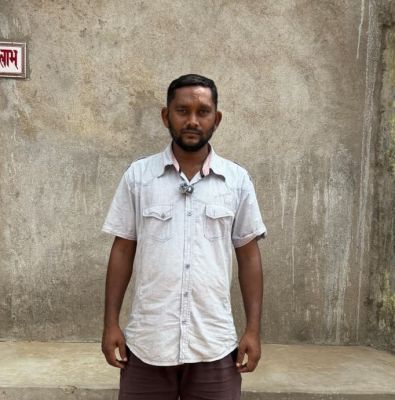
Raipur, September 21, 2026 / Once dependent on limited resources to meet her family's needs, Mrs. Babli Yadav of Chuktipani Gram Panchayat is now forging her own identity through her skills, hard work, and self-confidence. By joining the Rural Livelihood Mission Bihan, she has adopted not just one but several livelihood activities. Through diverse pursuits like photocopying and computer work, mushroom production, and Mahua procurement, she has built a strong income base. Today, her story is becoming an inspiration for women in the village who dream of standing on their own feet and strengthening their families' financial situation.
Mrs. Babli Yadav is the president of the Jagriti Mahila Self Help Group. After joining the group, she took advantage of the opportunities available to her and pursued self-employment. She secured a loan through the group, purchased a computer, and began photocopying and computer-related work from her home. Although she started small, her hard work and consistent efforts have transformed this work into a source of regular income.
The benefits of Babli's hard work weren't limited to her family. Photocopying, printing, and computer-related work became available right here in the village. The small tasks that previously required villagers to travel outside were now completed locally. Thus, her self-employment became a source of convenience for the villagers and a source of income for her family.
Mushroom cultivation increases income, new opportunity related to Mahua purchase
Mrs. Babli Yadav didn't limit her income to a single source. She began mushroom cultivation. This agriculture-based business, established in a limited space, provided her with additional income. Mushroom cultivation gave her the confidence that by properly utilizing local resources and available opportunities, new income streams could be created while living in a village.
She is also involved in the procurement of mahua through the PG group. Through this activity, she not only earns income herself but also connects rural women with employment and economic activities. Thus, from photocopying to mushrooms and mahua, Babli has combined multiple income sources for her livelihood.
The family was strengthened by a monthly income of about Rs 10,000.
Mrs. Babli Yadav explains that activities like photocopying and computer work, mushroom production, and mahua procurement add up to a monthly income of approximately 10,000 rupees. This additional income has strengthened the family's financial situation. While previously limited sources of income were necessary to meet family needs, she now has a regular source of income through her hard work.
For her, this change isn't limited to increased income. Economic independence has also boosted her confidence in decision-making. Today, she not only supports her family's needs but also inspires other women to engage in self-employment and group-based activities.
Bihaan provided an opportunity, and government schemes provided a path forward.
In Chhattisgarh, through the State Rural Livelihood Mission (Bihan), a strong focus is being placed on training, financial support, and connecting women's self-help groups with livelihood activities. Under the leadership of Chief Minister Shri Vishnu Dev Sai, these efforts are being furthered to connect rural women with economic activities and make them self-reliant. Babli Yadav's story is a local example of this, where group engagement, access to credit, and livelihood opportunities provided a rural woman with a path to self-reliance.
The story of Prime Minister Shri Narendra Modi's 'Lakhpati Didi' and his vision of women-led development
Mrs. Babli Yadav's success also aligns with a broader vision that emphasizes making rural women active participants in economic activities, not just beneficiaries of schemes. Prime Minister Shri Narendra Modi has described women associated with self-help groups as a strong link to a developed India and has emphasized increasing women's income and economic self-reliance through "Lakhpati Didi."
The central government's Deendayal Antyodaya Yojana - National Rural Livelihoods Mission (NRLM) focuses on strengthening livelihoods through financial, technical, and market-related support to women's self-help groups. The mission organizes rural women through community organizations and provides them with access to credit and other resources.
This mindset is gradually transforming the lives of the village women. Babli Yadav combined the strength she gained from the group with her local knowledge and hard work, and turned various activities into a source of livelihood.
Socio-economic support received from housing and mother worship
Mrs. Babli Yadav has also benefited from the Pradhan Mantri Awas Yojana and the Mahtari Vandan Yojana. The support provided by these schemes has provided a strong foundation for her family's basic needs. While housing provided the family with safe shelter, regular financial assistance helped meet household needs.
Babli says that joining government programs and Bihan has given her the opportunity to move forward. She believes that if women receive proper guidance, support from a group, and the opportunity to start an economic activity, they can not only support their families but also become sources of employment and inspiration for others.
From small beginnings to great recognition
Babli Yadav's story shows that self-reliance doesn't always require starting with a large business. Starting with a computer and a photocopier, followed by mushroom cultivation and mahua procurement, these small efforts combined to strengthen her income.
Today, Babli's small home business has become not just a source of income but a symbol of self-confidence. She now has not only work but also hope for new possibilities for her family and other women in her village.
Babli Yadav's success exemplifies that when women receive support from a group, financial opportunities, training, and government programs, they have the power to transform their circumstances. Babli of Chuktipani is not only strengthening her family's financial situation but also sending a message to other women in the village that with hard work, opportunity, and confidence, the path to self-reliance can begin in the village itself.
Service Story: Rachna Soni saved Rs 35,000 with a 50% discount on registration fees
Having property in your name boosts your confidence, and the remaining funds strengthen your family's financial plans.
Rachna Soni shares her experience under the 'Seva Sankalp Abhiyan', calls fee concession for women a useful initiative
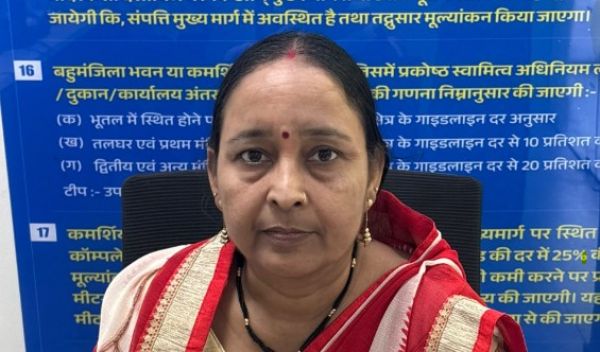
Raipur, September 21, 2026 / When the benefits of the government's public welfare policies simplify a family's financial planning, their impact is visible not only on paper but also in the family's future. For Rachna Soni of Bilaspur, a 50 percent discount on registration fees for property registration in women's names provided such an opportunity. Registering her property in her name saved her approximately 35,000 rupees. Rachna Soni explained that this fee relief reduced the cost of property registration and provided financial relief to her family.
In line with Prime Minister Narendra Modi's vision of a developed India and Chief Minister Vishnu Dev Sai's vision of a developed Chhattisgarh, various reforms are being undertaken under the guidance of Finance and Registration Minister O.P. Choudhary to make registration services simple, accessible, and convenient for citizens. In this vein, a 50 percent concession in registration fees is being provided to encourage property registration in the name of women. Under the "Seva Sankalp Abhiyan," the Registration Department is directly interacting with beneficiaries to understand the ground impact of these initiatives, their experiences, and their suggestions.
Reduced registry costs, providing financial relief to the family
Mrs. Rachna Soni explained that the 50 percent discount on registration fees when transferring property to her name saved her 35,000 rupees. She said this savings is a significant relief for her family compared to the costs of purchasing or registering property. This has reduced the financial burden of registration, while the remaining funds can be used for other family needs and future financial planning.
For Rachna Soni, this benefit went beyond simply reducing fees. Registering property in her name gave her the experience of property ownership and strengthened her participation in financial decisions. She said that such initiatives connecting women with property ownership help them become more financially secure and confident.
Registration fee reduced from 4% to 2%
The registration fee on documents related to the transfer of immovable property in favor of women has been reduced from 4 percent to 2 percent. This provides women with a 50 percent registration fee concession. This aims to encourage property registration in women's names and provide them with direct financial benefits.
Rachna Soni's story highlights the impact of this initiative on the ground. Saving ₹35,000 is a financial relief for her during the registration process, but owning a property in her own name also brings her financial security and confidence.
Stories of change emerging from 'Seva Sankalp'
Under the "Seva Sankalp Abhiyan," the department is engaging directly with beneficiaries to understand how governance services and reforms are impacting citizens' lives. Rachna Soni's experience demonstrates that when policy benefits reach families directly, they manifest in savings, convenience, and confidence.
This initiative, which encourages property registration in women's names, is not only financially beneficial but also important in increasing women's property ownership. Expressing gratitude to Chief Minister Vishnu Dev Sai and Finance and Registration Minister O.P. Chaudhary for this facility, Rachna Soni said that this concession in property registration for women is a useful step towards their economic empowerment.
Special Article: Chhattisgarh Housing and Infrastructure Development Board creates new record in property sale
7,650 properties sold in 2 years and 8 months, an 84% increase in the annual average
Under the leadership of Chief Minister Shri Vishnu Dev Sai and the guidance of Finance, Housing and Environment Minister Shri O.P. Chaudhary, the transparent, simple and beneficiary-centric system got a new impetus.
Properties worth Rs 1,609.18 crore sold, 1,584 properties disposed of through OTS-2
• Shri Sunil Tripathi
Assistant Director, Public Relations
Raipur, September 21, 2026. In order to give a new impetus to the expansion of housing facilities and infrastructure development in Chhattisgarh, the Chhattisgarh Housing and Infrastructure Development Board has achieved remarkable success in the field of property sales. Under the leadership of Chief Minister Shri Vishnu Dev Sai, the state government is placing special emphasis on speed, transparency in development works and providing better facilities to the citizens. In this sequence, under the guidance of Finance, Housing and Environment Minister Shri O.P. Chaudhary, the Board's efforts to better manage properties, simplify the sales process and prioritize the convenience of beneficiaries have yielded positive results.
Available data from the Board shows that 7,650 properties were sold in just two years and eight months, from 2024 to August 2026. The annual average property sales during this period was approximately 2,869 properties. This figure reflects a significant increase in the Board's sales capacity compared to its performance over the previous five years.
A total of 7,793 properties were sold by the Board over the five-year period from 2019 to 2023. The annual average during this period was approximately 1,559 properties. In comparison, the annual average has increased to approximately 2,869 properties in the current period, from 2024 to August 2026. This means the Board's annual average property sales have increased by approximately 84 percent in the current period compared to the previous five years.
Not just the number, but also the sales value has seen a significant jump.
The Board's achievement is not limited to the number of properties, but there has also been a significant increase in the amount received from property sales. From the year 2024 to August 2026, the Board has sold a total of properties worth ₹1,609.18 crore. During this period, the annual average of property sales was approximately ₹603 crore. In the five years from 2019 to 2023, a total of properties worth ₹1,362.21 crore were sold. During this period, the annual average sales value was ₹272.44 crore. In the current period, this average has increased to approximately ₹603 crore. Thus, the Board's annual average property sales value has increased more than twofold compared to the previous five years.
These figures indicate that the Board's strategy for managing and selling available properties has been effective. Sales activity has been accelerated by focusing on better utilization of properties, tailored sales to suit demand, streamlining the process for beneficiaries, and resolving pending cases.
Emphasis on development and good governance under the leadership of Chief Minister Shri Vishnu Dev Sai
The state government, under the leadership of Chief Minister Shri Vishnu Dev Sai, is working towards making governance processes more simple, transparent, and result-oriented, along with implementing development schemes. Continuous efforts are also being made to ensure timely availability of services to citizens and better utilization of government institutions' properties. The increase in the Housing Board's property sales is linked to this comprehensive approach. Effective utilization of the Board's properties is ensuring better management of available resources, while providing citizens with opportunities to acquire residential and commercial properties.
Deepka Coal Mine Protest: Villagers enraged by bulldozer action, SECL GM office locked
Deepka Coal Mine Protest: Villagers enraged by bulldozer action; SECL GM office locked.
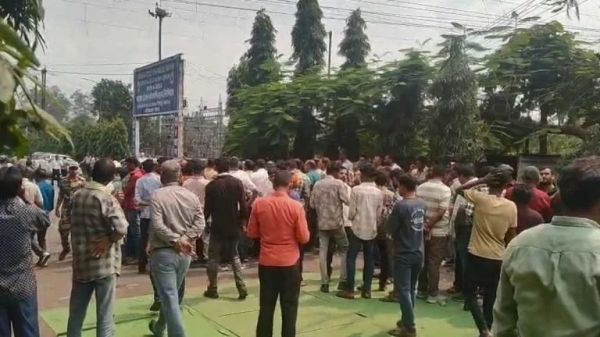
Hardibazar. Villagers' anger erupted against the management's action in Hardibazar village, which is falling under the scope of SECL Dipka mine expansion. On Friday morning at 5 am, SECL management demolished 8 government buildings including health centre, Patwari office and Anganwadi with the help of excavator. In protest against this unilateral action, on Saturday morning at 9 am, hundreds of villagers, led by Katghora MLA Premchand Patel and Sarpanch Lokeshwar Kanwar, locked the main gate of Dipka General Manager's (GM) office and started a sit-in.
The villagers were clear that the hospital and other buildings would not be demolished until adequate compensation, jobs, new settlements, and rehabilitation were provided. According to hospital employee Santosh, who spoke about Friday's action, they were not given enough time to retrieve their belongings, leaving important documents, medicines, and other materials buried under the rubble.
On Saturday, patients from several villages arrived for treatment, but after finding the hospital in ruins, they had to return empty-handed. Due to this blockade, work at the area office was completely halted throughout the day, and all officers and employees were stranded outside. Dipka's Chief Medical Officer, Ashok Kumar, tried to pacify the villagers, but they remained adamant on their demands.
On the other hand, in protest of this administration action, the traders of Hardi Bazaar expressed their strong opposition by keeping their establishments completely closed on Saturday, despite it being a weekly market day. MLA Patel also justified the villagers' demands and appealed to the administration to pay attention. Ultimately, after eight hours of fierce protests, the protest ended at 5 pm on the assurance of discussing the demands at Bilaspur headquarters.
The anger of the villagers of these villages erupted
In addition to Hardibazar, villagers from Saraisingar, Ranki, Malgaon, Amgaon, Darshakhancha, and Suabhodi also participated in large numbers in this demonstration. They said that their entire land has been absorbed into the mine, but the management has not provided them with jobs or compensation for housing or settlements. This is why anger is growing.
These are the main demands of the protesters
The protesting villagers demanded that the compensation determination and filing of land acquisition documents be corrected and the appropriate amount be awarded. Arrangements for better rehabilitation and new settlements be made for the displaced families. Affected families should receive permanent employment in exchange for land acquisition, as per the rules, and the rights of the families affected by the approximately 18 hectares of land should be protected.
Villagers clashed with CISF
When villagers, led by MLA Premchand Patel, arrived to surround the GM office, they engaged in a minor altercation and scuffle with CISF personnel and police deployed there. Police attempted to push the villagers aside, but approximately 300 men and women sat on a protest in front of the gate and began shouting slogans against SECL Dipka management.
Action should have been taken after giving information: Patel
Katghora MLA Premchand Patel said that the administration should have taken action only after giving prior notice to the Gram Panchayat. He warned that if the Dipka management does not meet the villagers' legitimate demands, while only the GM office has been locked, the mining operation will be completely shut down in the coming days. The Dipka management will be fully responsible for this.
A 'bill bomb' exploded as soon as the smart meter was installed! Instead of printed bills, they were allegedly handed slips ranging from 8,000 to 61,000 on blank paper
Bill shock’ strikes as soon as smart meters are installed! Allegations of being handed a slip on plain paper—instead of a printed bill—showing amounts ranging from ₹8,000 to ₹61,000.
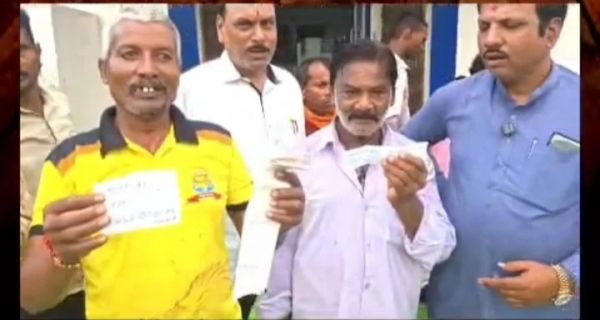
Kawardha/Dasharangpur. Amidst the government and electricity department's claims about smart meters, a case of allegedly handing over exorbitant bills to electricity consumers has come to light in Dasharangpur village, within the Pandariya assembly constituency of Kabirdham district. According to villagers, after the installation of smart meters, many consumers have been told amounts ranging from 8,000 to 61,000 rupees on blank slips instead of the regular printed electricity bills.
Upon receiving information from the villagers, Manikant Tripathi, President of the Block Congress Committee, Kawardha Rural, reached Dasharangpur and met with the villagers in person to inquire about their problems. Based on the complaints and documents presented by the villagers, he demanded an impartial investigation into the entire matter.
Manikant Tripathi said that if smart meters are for the convenience of consumers, then why are bills of thousands of rupees and paper slips instead of printed bills issued immediately after the meter is installed? The government and the electricity department should clarify the basis on which these bills are calculated and why proper bills are not being provided to consumers.
He said that the poor, farmers, and ordinary consumers are already suffering from inflation and rising household expenses. In such a situation, if electricity bills of thousands of rupees are suddenly handed over in the name of smart meters, it is a matter of serious concern. The electricity department should promptly resolve consumer complaints and publicly explain the entire process of meter reading, bill calculation, and recovery.
Manikant Tripathi warned that ignoring rural consumer complaints would not be tolerated. Congress stands with the villagers and will strongly raise the issue with the electricity department if necessary.
On this occasion, Bhishma Pandey, District Vice President Bholaram Chandravanshi, District General Secretary Akash Kesarwani, State Secretary Youth Congress Mahesh Kesari, Shailendra Kesarwani, Vice President Block Congress Raju Khan, former Sarpanch and hundreds of villagers were present.
Will the 43-year-old Mahanadi dispute end? CM Sai's statement raises hopes for a solution.
Will the 43-year-old Mahanadi dispute finally end? CM Sai’s statement sparks hope for a resolution.
Raipur. The Mahanadi water sharing dispute between Chhattisgarh and Odisha, which has been ongoing since 1983, is moving towards resolution. Several meetings have been held on the issue, but no positive results have been achieved. Recently, discussions were held in Delhi between Union Water Power Minister CR Patil, the Chief Ministers of both states, and officials. Chief Minister Sai left for a two-day visit to Odisha on Sunday. Prior to this, he issued a statement regarding the Mahanadi water dispute.
Speaking to reporters at Raipur Airport, Chief Minister Sai stated that the Chief Ministers and officials of both states had met in Delhi recently to discuss the matter. The matter has been referred to the Central Water Commission (CWC). He stated that the Mahanadi water dispute would be resolved very soon.
Regarding his visit to Odisha, Chief Minister Sai stated that he would be on a two-day visit. He would discuss various topics with Chief Minister Manjhi. He would also visit the Lord Jagannath Temple in Puri and pray for the prosperity of Chhattisgarh.
CM Sai targeted Congress
CM Sai targeted the Congress's "Chhatra Ki Goonj" program held in Indore, Madhya Pradesh. He said that wherever Rahul Gandhi goes, the Congress party is devastated. The same fate is likely to befall the Congress in Indore and Madhya Pradesh.
BJP attacks Rahul Gandhi over PM Modi's mimicry at 'Chhatron Ki Goonj' programme
Uproar over PM Modi mimicry at 'Chhatron Ki Goonj' event; BJP attacks Rahul Gandhi.
New Delhi: BJP leaders have strongly criticised Congress MP and Leader of Opposition in the Lok Sabha Rahul Gandhi for his comments on Prime Minister Narendra Modi at the opposition party's Chhatraon Ki Goonj programme in Indore.
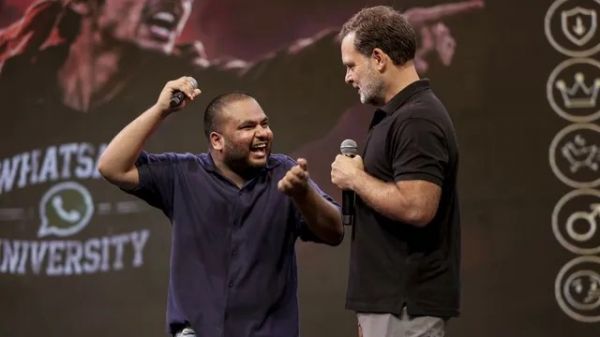
Rahul Gandhi, on stage with stand-up comedian Pulkit Mani, made some remarks and gestures that clearly indicated he was mocking Prime Minister Modi. BJP national spokesperson CR Kesavan said in a video statement this morning that Rahul Gandhi had insulted women by mocking a mother.
'Rahul Gandhi is promoting uncivilised culture'
"No decent and right-thinking person would find such vulgar and vile behavior amusing, yet Rahul Gandhi was seen laughing out loud on the stage he was sharing with them. Rahul Gandhi's promotion of such uncivilized culture is why he and the Congress party have failed to connect with the youth," Keshavan said.
'He was also expelled from Delhi University'
He said that even Congress leader Shashi Tharoor has acknowledged the party's failure on this front. Referring to the Delhi University Students' Union (DUSU) elections, he said, "Rahul Gandhi's vitriolic hate politics is the reason why the Congress Party and its student wing, the NSUI, were driven out of Delhi University."
'The elderly were shamelessly insulted'
The BJP spokesperson said, "On the one hand, Prime Minister Narendra Modi showed sensitivity by arranging a chair for an elderly man, while on the other hand, Rahul Gandhi was seen enjoying himself yesterday when similar elderly people were being shamelessly insulted. Rahul Gandhi, who supports clowns and such vulgar circus shows, cannot be taken seriously as a political leader."
What did the Union Ministers say?
"Rahul Gandhi and the Congress party have stooped to the lowest level of moral bankruptcy. Using a conversation with students to mock and insult PM Modi's late mother shows a shocking lack of basic human empathy and political culture," Union Education Minister Prahlad Joshi said in a post on Instagram.
Union Minister Kiren Rijiju attacked Rahul Gandhi, saying, "Congress has now become a party of comedians and jokers. He is out forever... RIP."
A 50 crore ransom demand in Raipur in the name of the Bishnoi gang! Threats to the renowned Dhebar family create panic.
₹50 crore extortion demand in Raipur in the name of the Bishnoi gang! Threat to the prominent Dhebar family sparks panic.
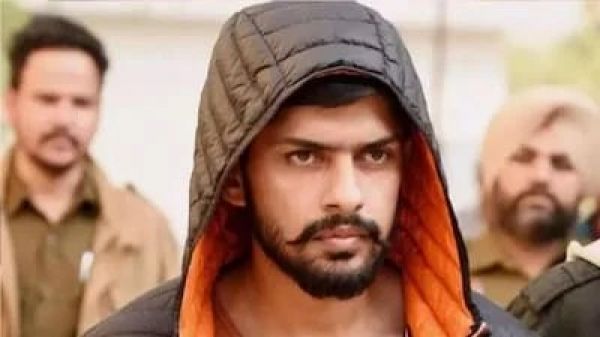
Raipur. The Lawrence Bishnoi gang, which has been active in Delhi-NCR, Haryana, and Punjab, has now reached Chhattisgarh. According to sources, a member of the gang has threatened a prominent political family in Raipur over the phone and demanded a ransom of ₹50 crore. Upon learning of the incident, the Raipur police have launched an investigation.
According to reports, the Dhebar family received a threatening phone call in which an unknown caller identified himself as a member of the Bishnoi gang and demanded a ransom. Furthermore, it has been reported that if the ransom is not paid on time, serious consequences will be faced.
Extracting information about unknown callers
Senior officials of the Raipur Central Zone Police Commissionerate stated that, given the seriousness of the matter, a crime has been registered based on the complaint. A special team from the Cyber Cell is also investigating the matter. Call details of the unknown caller are being obtained. The cyber team is also conducting a technical investigation of the unknown caller's numbers. The identity of the caller will soon be determined. The police team is investigating the accused.
Another police team is also questioning the family and gathering important information. The Dhebar family's past rivalry, recent disputes with others, and any communication with Anwar Dhebar during Aman Saw's arrest are all being investigated.
GST raid: GST raid on gutkha factory, 30 sacks of goods and machines seized
GST Raid: GST officials raid gutkha factory; 30 sacks of goods and machinery seized.
GST RAID: Durg. In a major action on Sunday, the team of Central GST Intelligence raided a place related to gutkha manufacturing in Durg district of Chhattisgarh. On receiving information that gutkha of Sitar company was being manufactured inside a factory in Station Chowk area of Kumhari, the team reached the spot and started investigation. During the action, the team seized two machines used in making gutkha. Apart from this, about 30 sacks of readymade gutkha were also recovered from the spot. The value of the seized goods is said to be in lakhs of rupees. However, this has not been officially confirmed by the officials yet.
GST team reached on the basis of information According to the information, the team of Central GST Intelligence had received information about illegal manufacturing of gutkha in Station Chowk area of Kumhari. After getting the information, on Sunday a team of about 10 to 12 officers and employees reached the spot in three vehicles. The team started checking the factory and the warehouse. During this, the machines related to gutkha manufacturing, finished goods and other items kept there were checked. The officers seized two gutkha making machines from the spot.
Tax rules are also being investigated. The Central GST Intelligence team is investigating not only the gutkha manufacturing process but also the tax records related to it. The officials are finding out whether GST and other tax rules were being followed in the gutkha manufacturing and selling business. Apart from this, the documents present in the warehouse, purchase-sale records and other materials are also being examined. Only after matching the documents will the status of further action be clear.
Documents related to the warehouse owner are being scrutinized. According to preliminary information, the owner of the warehouse from which the gutkha and machines were recovered is said to be Suresh Gupta. The GST team is examining the documents and other records recovered from the warehouse. Officials have not yet shared any official details in this matter. Information regarding the quantity, price, and tax status of the seized goods is likely to be revealed after the investigation is complete.
The team left for Raipur with the seized goods. After completing the action, the team of Central GST Intelligence left for Raipur taking the seized machines and gutkha with them. Now further action will be taken after examining the seized material and verifying the documents. It is worth noting that the GST department has been taking action from time to time in cases related to tax evasion and illegal business. After this action in Kumhari, other aspects related to gutkha business are also being investigated.
Seva Sankalp Abhiyan: Gajendra Jatwar of Raigarh got a permanent home
Secure and respectable life under PM Awas Yojana
Raipur. The Pradhan Mantri Awas Yojana has brought new hope and stability to the family of Gajendra Jatwar of Raigarh district. Once living in a mud house, facing the threat of rain and poisonous creatures, the family is now moving towards a secure life in a permanent home. Gajendra says that this house is not just a house for him, but a symbol of security, respect, and a better future.
Gajendra Jatwar explains that his family previously lived in a mud house. During the rainy season, the condition of the house deteriorated, and there was also the danger of poisonous creatures. The family was worried about the possibility of the house collapsing during heavy rains. Due to their limited income, building a permanent house with their own resources was difficult. During this time, he learned about the Pradhan Mantri Awas Yojana through the Gram Panchayat. He submitted an application for housing to the Panchayat. After his name appeared on the scheme's list, the construction process began. Now, his house is almost complete, and the family has found relief from long-standing problems. The housing construction process also provided him with employment opportunities.
PM housing is no less than a boon for us.
Gajendra Jatwar described the Pradhan Mantri Awas Yojana as a blessing for his family. He said that with the permanent housing, he no longer has to worry about the house collapsing during the rainy season, and the fear of poisonous creatures has also significantly reduced. All family members now live in a safe environment. Expressing gratitude to Prime Minister Narendra Modi, Chief Minister Vishnudev Sai, and the district administration, he said that the government's housing scheme has given his family the opportunity to live a life of dignity with a safe roof.
Seva Sankalp Abhiyan: Raigarh's registration office becomes a model of civic convenience
From help desks to digital payments, the entire system has become citizen-centric.
Average waiting time is 15.33 minutes, 64 citizens are served daily
Under the leadership of Chief Minister Vishnu Dev Sai and the initiative of Finance Minister OP Choudhary, citizens are getting better registration facilities.
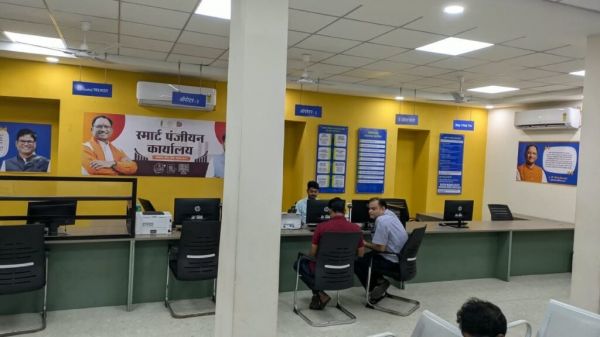
Raipur. Under the leadership of Chief Minister Vishnu Dev Sai and the initiative of Finance Minister OP Choudhary, the registration office of Raigarh has been developed as a model registration office equipped with modern facilities. Developed under the Seva Sankalp Abhiyan, the registration process in this office has been made simpler, transparent, and citizen-centric. Now the focus of the system is not the office process, but the convenience and needs of the citizen. Property registration is an important process for any individual and family. Keeping this in mind, various stages of the process have been streamlined in the registration office to save citizens from unnecessary hassle and the need to visit the office again and again.
Convenience at every stage from admission to registration
A help desk and reception have been set up to provide citizens with essential information upon entering the office. The preliminary document verification facility allows for identification of deficiencies at an early stage of the process, saving them from hassles and unnecessary time at the final stage. A token-based queue management system has been implemented to streamline crowds and queues. Information regarding stamp duty, registration fees, and required documents is displayed through boards and digital displays. The availability of digital and cashless payments has increased transparency in transactions. An average of 64 citizens are accessing services daily at the Model Registration Office, while an average of 16 documents are being registered daily. The average waiting time for citizens has been recorded at 15.33 minutes. The feedback received so far includes 105 positive citizen responses.
The entire process for citizens at the Model Registration Office is organized into nine steps: entry into the office, guidance from the help desk, document pre-check, token collection, orderly waiting, the prescribed registration process, digital or cashless payment, document and status information, and graceful exit upon completion.
Special arrangements for senior citizens and disabled persons
Keeping citizens' convenience in mind, amenities such as air-conditioned waiting rooms, comfortable lounges, charging stations, clean drinking water, and restrooms have been provided. Special assistance has also been provided for senior citizens and the disabled. Citizens can share their experiences and suggestions directly via QR code.
Work culture is changing along with technology.
To ensure uninterrupted service delivery, the office has developed a dedicated server room and robust IT infrastructure. The Model Registration Office's system is not limited to modern facilities, but also includes simplified procedures, technological systems, transparency, accountability, and a sensitive approach to citizens.
Developed under the leadership of Chief Minister Vishnu Deo Sai, with a focus on good governance and citizen amenities, and at the initiative of Finance Minister OP Choudhary, the Raigarh Model Registration Office is exemplifying how technology, streamlined processes, and a sensitive work culture can make government services more accessible, transparent, and convenient for citizens. This system has proven to be an effective initiative to respect citizens' time and provide them with a better service experience.
Mahatari Vandan Yojana became the basis of self-reliance
The women of Gandai's Kandra community have given new strength to bamboo craft.
Raipur. The Chhattisgarh government's ambitious Mahtari Vandan Yojana is proving fruitful in promoting women's economic independence and empowerment. Women are not only using the monthly funds received under the scheme for their daily needs, but are also paving the way for strengthening their traditional livelihoods.
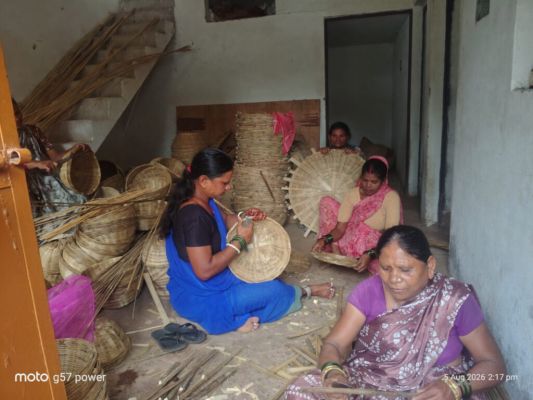
Women from the Kandra community, residing in Ward No. 12 of Gandai Nagar Panchayat, are using funds received from the Mahatari Vandan Yojana to purchase bamboo and craft it into baskets, spoons, and other useful items. It's worth noting that bamboo crafts are an important part of the Kandra community's traditional livelihood. Regular financial assistance from the scheme has provided the women with the financial support they need to continue this traditional occupation.
Baskets, spoons, and other bamboo products crafted by women using their traditional skills are sold locally, providing them with additional income. Thus, by using funds received under the Mahatari Vandan Yojana for income-generating activities, women are becoming more financially capable and self-reliant.
This initiative is an excellent example of how government funding for women simultaneously promotes traditional skills, self-employment, and women's empowerment. The women of the Kandra community in Gandai Ward No. 12 combined the funds from the Mahtari Vandan Yojana with their hard work and skills.
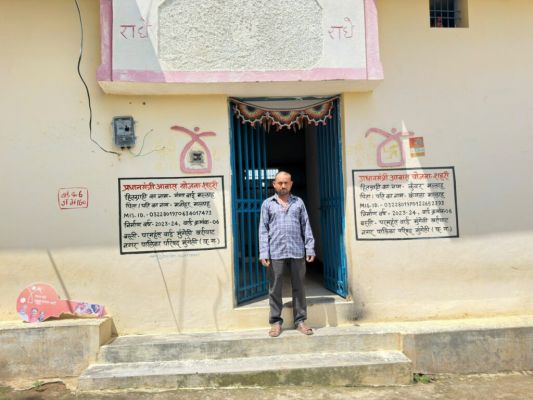
Manohar Mallah's dream of a permanent home came true under the Pradhan Mantri Awas Yojana.
Manohar gets permanent, safe and solid housing
Raipur. A permanent, safe, and pucca home for one's family is a basic need and a significant life dream for every individual. For Manohar Mallah, a resident of Paramahansa Ward in Mungeli, the Pradhan Mantri Awas Yojana (PMAY) proved to be a powerful tool to fulfill his dream.
The benefits received under the scheme have resulted in the construction of a permanent home, providing his family with safe and comfortable housing. Due to financial constraints, it was difficult for Mallah to secure a permanent home for his family. However, the financial assistance received under the Pradhan Mantri Awas Yojana (PMAY) made it easier for him to build his own home. Now, his family lives a safe and dignified life in their permanent home.
There is an atmosphere of happiness in Manohar Mallah's family due to the construction of a new house. By getting a pucca house, the family has got relief from rain, heat and other weather related problems. The comfort of their own house has increased security, stability and self-confidence in the family. Expressing gratitude to the government for the Pradhan Mantri Awas Yojana, Manohar Mallah said that a pucca house is not just a house for his family, but is the foundation of a safe, permanent and better future. There is an atmosphere of happiness in the family as the dream of having a pucca house, which was seen for years, has now come true.
Stakeholder workshop organized for the formulation of Chhattisgarh Livestock Development and Breeding Policy 2026
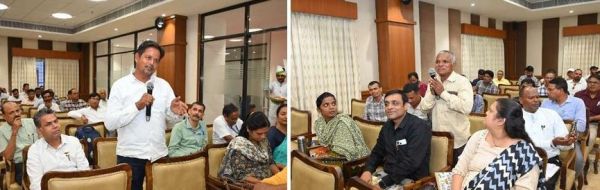
Raipur. An important stakeholder workshop was held at the New Circuit House in Raipur to determine and outline the Chhattisgarh Livestock Development and Breeding Policy 2026. The main objective of this workshop was to review the provisions of the state's existing breeding policy, keeping in mind the current circumstances and changing needs of the dairy sector, and to receive valuable suggestions from various experts.
Key attendees and speakers
The workshop was attended by experts from India and abroad in the field of animal breeding, scientists, veterinary department officials, dairy-related organizations, non-governmental organizations, and a large number of dairy farmers. Key participants included Director of Veterinary Services Chandrakant Verma, Senior General Manager of the National Dairy Development Board (NDDB), Dr. R.O. Gupta, Group Head (Animal Breeding), Dr. Nilesh Naik, and Manager, Dr. Swapnil Gajjar. Chhattisgarh State Cooperative Milk Federation Managing Director Dr. M. Jayakrishna, College of Veterinary and Animal Husbandry, Anjora (Durg), Dr. Kausar Parveen (on the state's local breeds), Dr. Bhupendra Devandan (on the Central Semen Museum), and Dr. Vivek Awasthi (on the proposed policy draft). Representatives and officials from various partner organizations, including NDDB Dairy Services (NDDB), participated in the program.
Advanced Technology and Policy Making
During the workshop, advanced breeding techniques (EDTs) and the formulation of animal breeding policy were discussed in detail. Emphasis was placed on measures to improve animal productivity and genetic potential. The focus was on ensuring easy access to quality breeding services tailored to local conditions for farmers and livestock owners in the state. Various technical aspects related to the sustainable development of the livestock sector and strengthening the dairy business were discussed in detail.
From water conservation to public participation, the pledge of service resonated at Malhania reservoir.
Awareness rally and cleanliness drive under Jal Jan Seva Sankalp, message given for clean environment along with conservation of water sources.
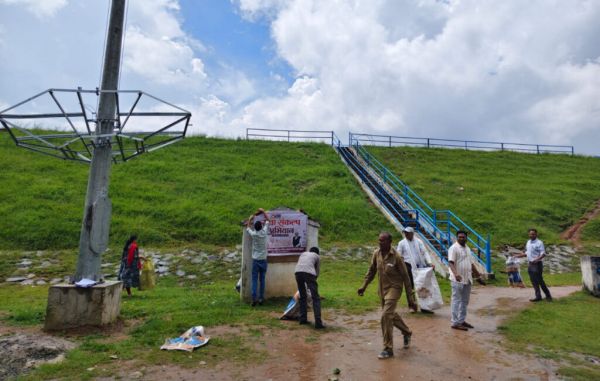
Raipur. Under the "Seva Sankalp Abhiyan," various activities are being organized in the district to raise public awareness about water conservation, cleanliness, and environmental protection. In this series, the "Jal Jan Seva Sankalp" program was organized at the Malhaniya reservoir in Devargaon village of the Gaurela development block. The program created awareness about water conservation, water source cleanliness, and environmental protection, while conveying the message of collective responsibility.
The Water Resources Department and the Public Health Engineering Department participated in the program. A water conservation awareness rally was held on this occasion. Through the rally, villagers and local citizens were made aware of the importance of water, the protection of water sources, and the judicious use of water. Participants conveyed the message of making water conservation a part of daily life and safeguarding water sources for the future.
Under the program 'Pledge taken for clean water reservoir, healthy environment',
a cleanliness drive was also launched in Malhaniya reservoir and its surrounding area. During the drive, while cleaning the reservoir premises, people were motivated not to throw garbage in water sources, maintain cleanliness around and conserve natural resources.
Underlining the importance of water conservation and cleanliness, the officers and employees said that water sources are an important basis for rural life, agriculture and environmental balance. For their conservation, along with administrative efforts, active participation of citizens is also necessary. They appealed to the citizens to keep the water sources clean and continuously cooperate in their conservation.
'Water conservation campaign will be strengthened with public participation'
The objective of 'Jal Jan Seva Sankalp' is to make common citizens responsible for water conservation and to promote cleanliness and safety of water sources through community participation. Through the programme, the message was given that water conservation is not the responsibility of only one department, but is the collective responsibility of every citizen. Departmental officers and employees appealed to the citizens to stop unnecessary wastage of water, use water judiciously, protect water sources from pollution and inspire people around them to conserve water.
"Seva Sankalp Abhiyan"
(Seva Sankalp Abhiyan) is promoting public welfare and environmental protection activities in the district. This event, focused on water conservation and sanitation, is an important initiative to connect the spirit of service with environmental protection. The program, held at Malhaniya Reservoir, conveyed the message that serving water sources and nature is an important responsibility towards society and future generations. The water conservation awareness rally and cleanliness campaign strengthened the spirit of community participation among villagers. The program emphasized the importance of adopting responsible behaviors towards water, sanitation, and environmental protection. This initiative, organized under the Seva Sankalp Abhiyan, accelerated collective efforts towards water conservation and environmental enhancement through public participation in the district.
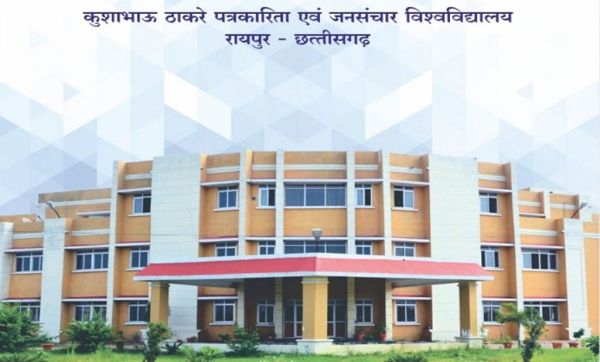
Kalinga University and Kushabhau Thakre University of Journalism sign MoU, enhance cooperation in education and research
The MoU was signed by Kalinga University Vice Chancellor, Prof. Dr. R. Sridhar, Registrar, Dr. Sandeep Gandhi, and Kushabhau Thakre University of Journalism Vice Chancellor, Prof. Dr. Manoj Dayal, Registrar, Sunil Kumar Sharma. Dr. Yogesh Vaishnav, Head of the Department of Journalism, Kalinga University, and Dr. Ashutosh Mandavi, Head of the Department of Management, Kalinga University, played a key role in this initiative.