From 'Chendru Dwar' to 'Samvarte Chhattisgarh': Forest exhibition at Rajyotsav tells the story of greenery, heritage and livelihood
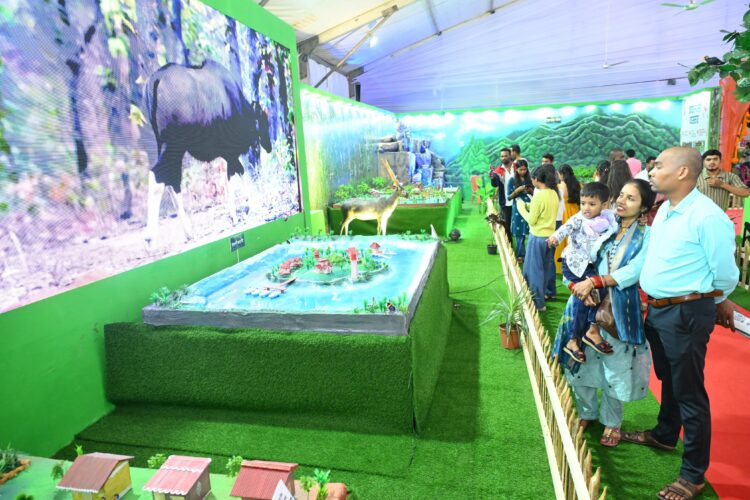
Forest conservation and employment are on display through plantation, bamboo crafts, forest produce and herbal products.
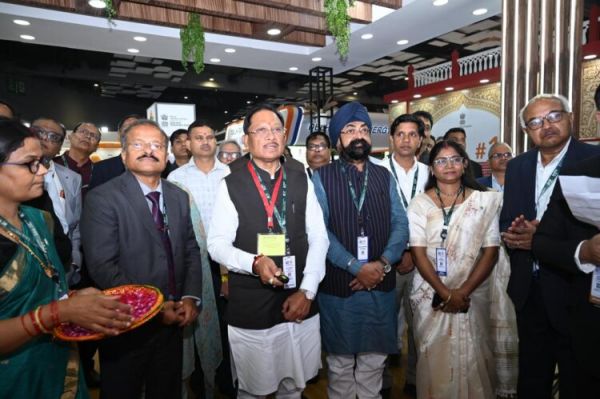
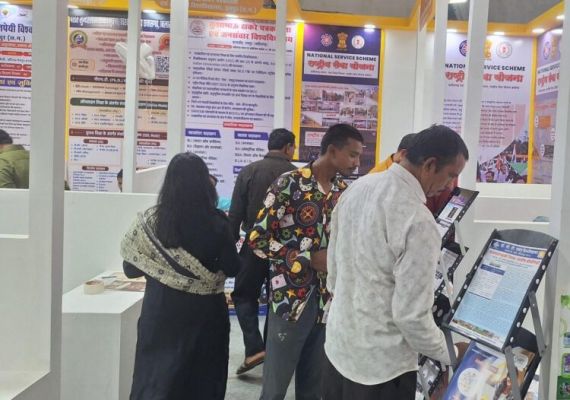
Raipur, November 2026: On Chhattisgarh's 26th Foundation Day, the Forest and Climate Change Department's exhibition at the Rajyotsav site in Naya Raipur is a major attraction. It showcases forest and wildlife conservation, along with tribal culture, rural livelihoods, and self-reliance initiatives.
The main gate of the exhibition is modeled after the famous Chendru Gate of Indravati Tiger Reserve, Bijapur. It depicts the friendship between Chendru, a tribal youth from Bastar, and a tiger, symbolizing the coexistence of humans and wildlife.
Under the theme 'Sanvarta Chhattisgarh', the achievements of the 'Ek Ped Maa Ke Naam' campaign have been showcased. According to the department, 3.50 crore saplings were planted in the year 2024, which is 140 percent more than the target, and 3.55 crore saplings were planted in the year 2025, which is 215 percent more than the target. Under the Kisan Vriksha Mitra Yojana, 36,896 farmers have planted 3.67 crore saplings on their 62,441 acres of private land. This has created opportunities to increase farmers' income along with environmental protection.
The "Changing Bastar" panel highlights the changes in the region and livelihood enhancement efforts. Under this initiative, 572 Devgudis have been constructed and renovated. MNREGA has generated 21.67 lakh man-days of employment. Forest produce collection is directly benefiting villagers. Thirty-five gypsies are being operated to promote tourism in the Kanker region, providing employment to approximately 200 local youth.
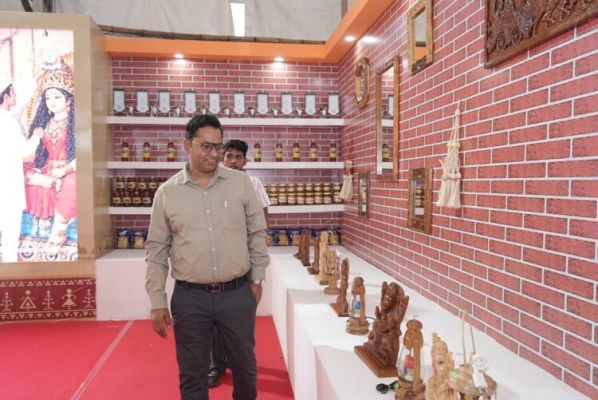
The Joint Forest Management and Employment stall displays bamboo houses, boats, fish, lanterns, temples, vases, and decorative items. These products showcase the art and skills of rural artisans. Honey, amla, and other products produced at Van Dhan Centers are also available for sale.
Through the Medicinal Plant Board's "Planting Medicinal Plants in Home Gardens" scheme, rural women are being informed about income opportunities. According to the board, by planting plants like singi and asparagus in their gardens, women can earn an annual income of 20,000 to 30,000 rupees, and the benefits can last for 20 years. Under the pilot project, 1.21 lakh saplings have been planted in 27 villages of Dhamtari district.
The Chhattisgarh Herbals stall showcases products such as Safed Musli Powder, Triphala Powder, Amlaki Powder, Aloe Vera Shampoo, Mahabhringraj Oil, and Aloe Vera Soap. Models of the Kanger Valley, Tirathgarh Falls, and rural ponds also attract visitors' attention and convey the message of environmental protection.
Mr. Trivendra Sahu and Mr. Ravi Nirmalkar, from Marod village, who visited the exhibition, said that the Forest Department's exhibition felt as if the entire forest of Chhattisgarh had been concentrated in one place. The bamboo artifacts, information on medicinal plants, and herbal products were very useful. They praised the initiative to conserve forests and provide employment to villagers.