CG News: Who will receive the "Chief Minister's Excellence Award"? The fate of these Chhattisgarh officers and departments will be decided.
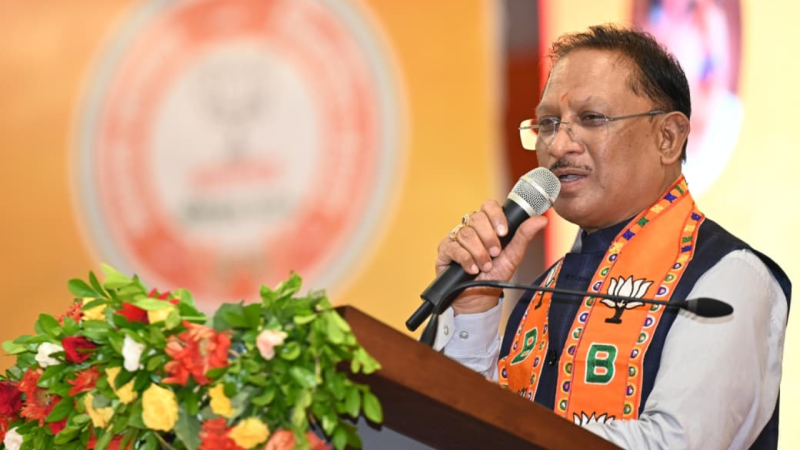
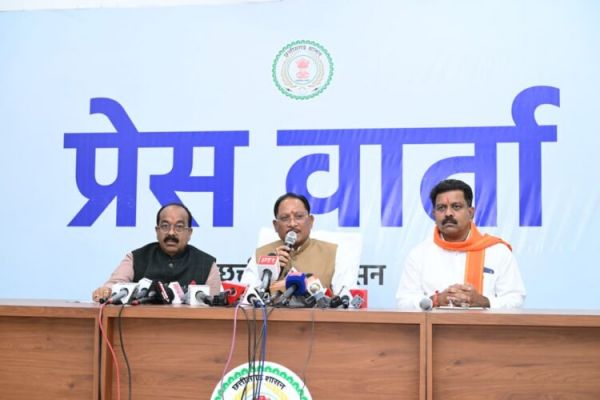
CG News: Highlighting the transformation towards good governance and the strengthening of administrative culture in Chhattisgarh, Chief Minister Vishnu Deo Sai today announced the Chief Minister's Excellence Awards 2025–26. These awards will recognize innovations implemented by various districts and departments across the state that have played a significant role in making governance more effective, transparent, and citizen-centric.
The awards are an effort to institutionalize this mindset.
CM Sai said that these awards, instituted by the Department of Good Governance and Convergence, are a clear indication that the state government is prioritizing innovation, concrete results, and citizen well-being at the heart of public administration. He said that the quality of governance should be measured not just on the basis of intentions or expenditure, but on its real, measurable impact, scalability, and ability to address grassroots problems. The Chief Minister's Excellence Awards are an effort to institutionalize this new administrative mindset, where technology, sensitivity, and institutional reforms combine to empower public service.
He said that good governance is achieved not only through policies but also through continuous innovation. On the occasion of Good Governance Day, celebrated on the birth anniversary of the revered Atal Bihari Vajpayee, the winners of the Chief Minister's Excellence Awards 2025–26 have been announced to recognize outstanding administrative innovations developed in Chhattisgarh with the public interest at the center.
312 innovation proposals this year
Chief Minister Vishnu Deo Sai said that innovation in governance is not an option, but the need of the hour and the responsibility of the administration. Public systems must continuously adapt to meet citizens' expectations with speed, transparency, and reliability. He further stated that the innovations honored today are not just individual achievements, but exemplary and replicable models for future-oriented governance. A robust and multi-tiered evaluation process was adopted for the Chief Minister's Excellence Awards 2025–26, aimed at striking a balance between inclusivity and quality.
He said that a total of 312 innovation proposals were received this year, including 275 from districts and 37 from state-level departments. This widespread participation is a testament to the innovative thinking that problem-solving is developing at every level of governance. This trend also reflects a cultural shift toward solution-oriented administration.
10 Winning Innovations Selected
In a two-stage selection process for the Chief Minister's Excellence Award, 55 innovations were shortlisted in the first stage. Thirteen innovations were subsequently selected as finalists, and finally, 10 winning innovations were selected, with an equal number of entries from the district and departmental categories. The evaluation weighted results with 50 points, scalability with 40 points, and innovation with 10 points, ensuring that recognition was based not just on ideas, but on tangible and impactful results.
Among the district category winners, Dantewada district's "Blockchain-based Land Records Digitization" initiative stood out as a prime example. This innovation eliminated manual and paper processes and implemented a blockchain-based, tamper-proof system, reducing the time to obtain land records from weeks to just minutes. This initiative completely eliminated document fraud and accelerated service delivery, setting a new standard for revenue administration in tribal and remote areas.
The “Nirman Jashpur” initiative in Jashpur district demonstrated how integrated digital monitoring can effectively improve the implementation of infrastructure projects. Covering over 7,300 projects across 16 departments and 444 gram panchayats, the system enabled real-time monitoring, geo-tagged verification, and GIS-based planning, improving the quality of work and significantly reducing delays.
The Enhanced Take-Home Ration (A-THR) innovation implemented in the Mohla-Manpur-Ambagadh Chowki area offered an effective solution to the challenge of severe malnutrition. Developed in collaboration with national and international institutions, this nutrient-dense diet achieved a 77.5 percent improvement rate among severely malnourished children. This initiative exemplifies how evidence-based nutrition interventions can positively transform lives at scale.
The "Elephant Tracking and Alert App" in Gariaband district has powerfully demonstrated the role of technology in reducing human-wildlife conflict. Through AI-based tracking and real-time alerts, human casualties were reduced to near zero, while crop damage and compensation burdens were significantly reduced. This initiative, which has been adopted outside the state, has become an effective model of conflict-sensitive governance.
The "Integrate Intelligence Tool" in Narayanpur district demonstrates the utility of data integration in the field of internal security. This real-time, geospatial, and predictive platform has enabled the conduct of over 100 planned operations, improved coordination between various agencies, and strengthened situational awareness in Left Wing Extremism-affected areas.
In the departmental category, the Department of Education's "Vidya Samiksha Kendra (VSK)" emerged as a strong pillar of data-driven education governance. This AI-enabled platform monitors over 56,000 schools, 283,000 teachers, and 5.75 million students, enabling early identification of dropouts, better utilization of resources, and evidence-based decision-making.
The Department of Commerce and Industry's "One Click Single Window System" has made significant progress in improving ease of doing business. Integrating 136 services from 16 departments, the system has simplified approval, promotion, grievance redressal, and inspection processes, reducing delays and enhancing transparency and investor confidence.
The Commercial Taxes (Excise) Department's comprehensive e-governance reform initiative strengthened revenue collection and compliance. Through end-to-end digitization, a track and trace system, and a real-time dashboard, the department generated revenue of ₹5,425 crore and set new standards for transparency and regulatory oversight.
The Department of Forest and Climate Change's "FDS 2.0 – e-Kuber Digital Payment System" implemented a completely cashless, RBI-integrated payment system, eliminating manual check-based processes. It completed 1.8 million transactions worth over ₹1,776 crore, ensuring timely wage payments, livelihood security, and transparent fund flow, even in remote and Naxal-affected forest areas.
The Panchayat and Rural Development Department's QR code-based self-disclosure system under MNREGA has provided a new impetus to citizen-centric governance. By providing villagers with real-time access to scheme information through QR codes, this initiative has reduced dependence on intermediaries and strengthened transparency in over 11,000 gram panchayats.
Speaking on the occasion, Chief Minister Sai stated that these awards mark a new beginning in promoting public welfare-focused innovations and good governance in Chhattisgarh. They signal that Chhattisgarh's future lies in scalable, citizen-centric, and technology-enabled governance. Award-winning officers and teams will participate in a leadership development program at a prestigious management institute, ensuring that today's innovations become the standard of governance in the future.

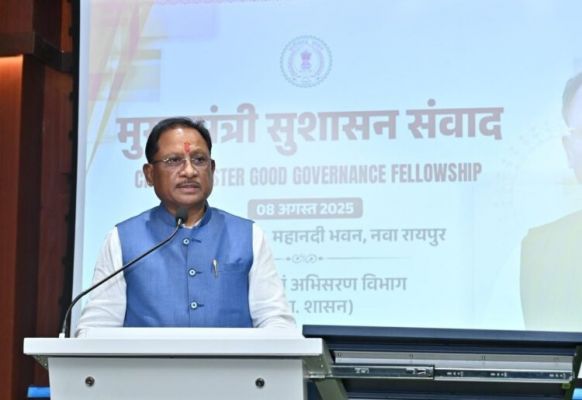



.jpeg "A New Milestone in Good Governance : CM Helpline Becomes the Voice of the People, Over 92,000 Complaints Registered and More Than 42,000 Grievances Resolved in Just One Month,48 Government Departments on a Single Platform; Raipur Leads Among Districts, Energy Department Tops in Grievance Redressal")