President Draupadi Murmu visited the grand exhibition based on tribal traditions and culture.
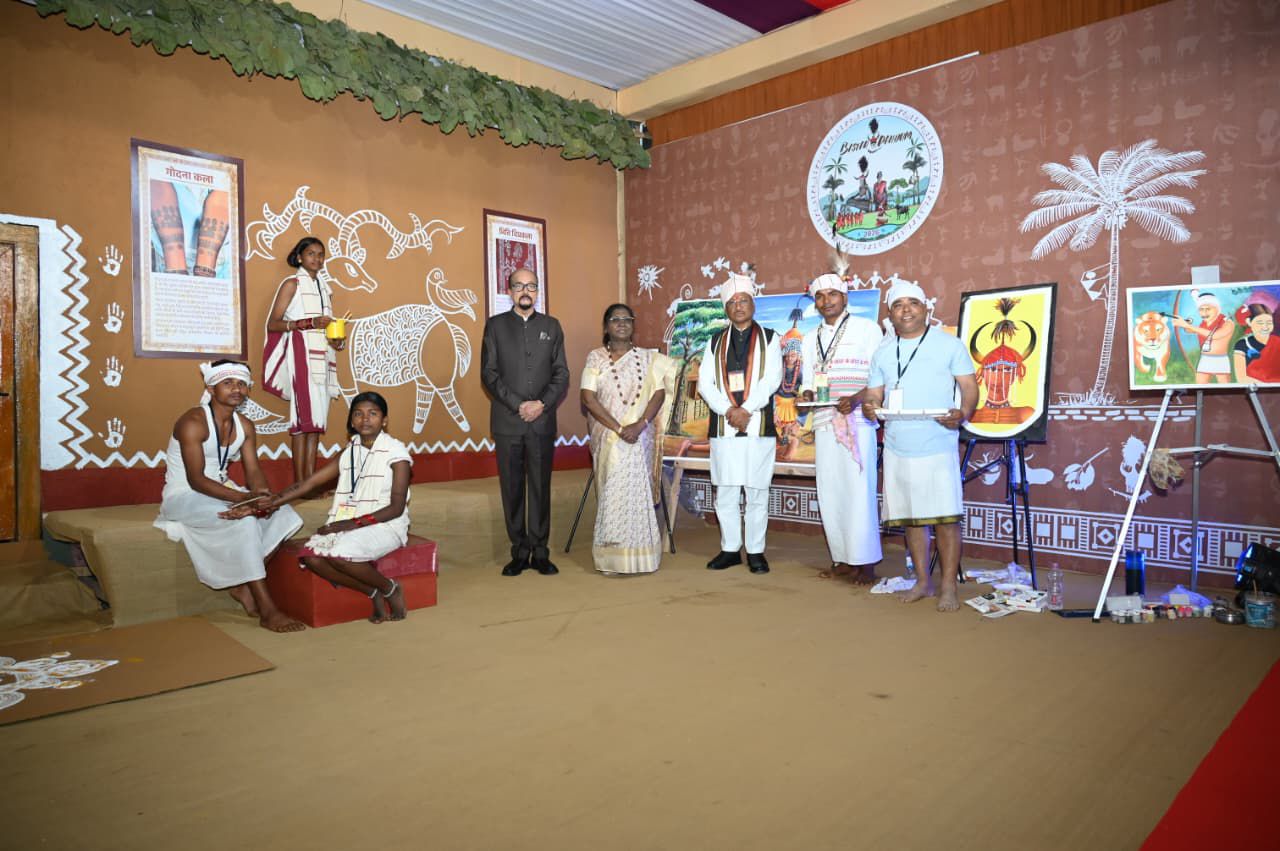


RaipurPresident Draupadi Murmu, who arrived to attend the inauguration ceremony of Bastar Pandum, today visited a grand exhibition showcasing the fragrance of Bastar's soil and primitive tribal traditions. During the event, the President visited various stalls and received detailed information about the arts and products displayed from local residents and artisans. President Murmu described Bastar Pandum as a powerful medium for preserving tribal heritage and promoting it to the world. She visited and appreciated the impressive exhibitions, one by one, featuring Dhokra handicrafts, terracotta, wood carving, sisal art, bamboo art, iron craft, tribal costumes and jewelry, tumba art, Bastar tribal paintings, local cuisine, and folk paintings. The exhibition, dedicated to tribal handicrafts at the Bastar Pandum venue, featured a special display of Dhokra art. This handicraft utilizes the lost wax casting technique. It is an ancient tribal metal art of India, vividly depicting nature, deities, and rural life. Each Dhokra piece is entirely handmade. Clay, wax, wire, brass, a hot kiln, and a cleaning machine are used in its creation. Clay figures depicting local terracotta art were also on display, vividly depicting folk traditions, rural life, and traditional beliefs. The exhibition showcased the vibrant expression of cultural and religious traditions through woodcarving. Teak, bija, siwan, and sal wood are used to create wooden sculptures, where artisans carve intricate shapes using traditional tools. The President also observed jute fabrics and other handicrafts made using sisal art. Another stall displayed traditional utility and decorative items made from bamboo. Artifacts made using wrought iron also particularly captivated the President. The stall displaying tribal jewelry drew the President's attention. This stall showcased tribal jewelry handcrafted from silver, pearls, shells, and various metals. These ornaments symbolize the identity, social traditions, and cultural heritage of tribal communities. Traditional musical instruments and decorative items made from dried gourd-like pods, known as Tumba art, were also on display. The tribal costumes and jewelry stall showcased traditional costumes and jewelry of the major tribes of the Bastar region—Dandami Madia, Abujhmadia, Muria, Bhatra, and Halba—by young men and women. President Murmu also visited a live exhibition of tribal paintings at the Bastar Pandum site. This exhibition presented a vivid glimpse of tribal life, nature, and traditions through Bastar paintings. Bastar art depicts the forest, folk deities, andFestivals and daily life are depicted through simple colors and symbols. This painting is an important medium for preserving cultural heritage passed down through generations. The local cuisine stall displayed food items and beverages used in tribal daily life. Traditional dishes like Jondhri Laai Laddu, Jondhra, Mandia Paej, Amat, Chapra Chutney, Bhenda Chutney, Kulathi Dal, Paan Bobo, Tikhur, along with beverages like Landa and Sulfi were displayed. The exhibition of folk paintings related to folk life displayed photographs related to Bastar's culture and history, natural beauty, folk life and folk traditions, as well as literature related to Bastar's tribal society and folk culture.


.jpeg "A New Milestone in Good Governance : CM Helpline Becomes the Voice of the People, Over 92,000 Complaints Registered and More Than 42,000 Grievances Resolved in Just One Month,48 Government Departments on a Single Platform; Raipur Leads Among Districts, Energy Department Tops in Grievance Redressal")