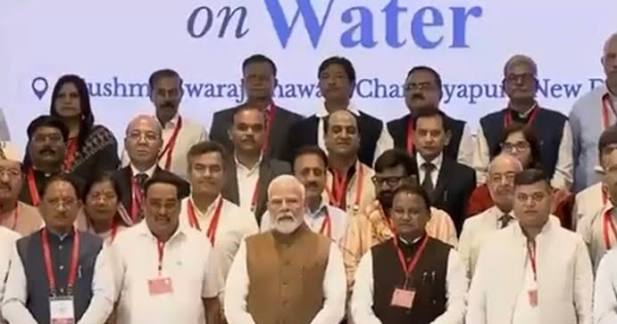
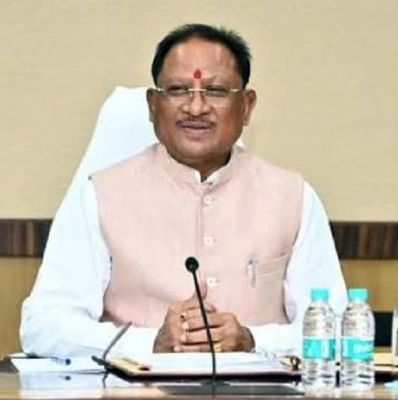
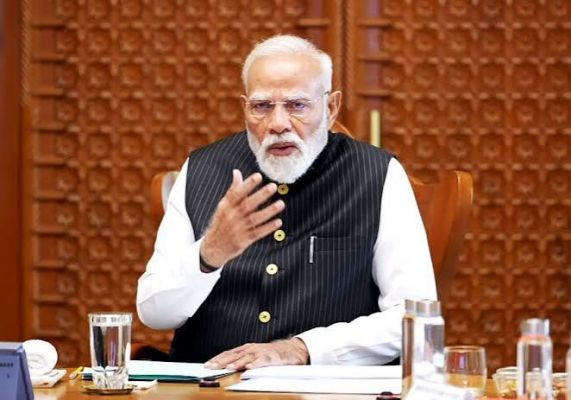
In the departmental summit of the Ministry of Jal Shakti, held in the august presence of Prime Minister Narendra Modi at Sushma Swaraj Bhawan in New Delhi, Chief Minister Vishnu Dev Sai presented the innovations and public participation based efforts being made for water conservation in Chhattisgarh on the national platform. In the 'Rain Water Harvesting' session of the conference, Deputy Chief Minister Arun Saw gave information about the work being done in the state for rain water harvesting, ground water recharge and conservation of drinking water sources. Union Jal Shakti Minister C.R. Patil, along with water resources ministers and senior officials of various states were present in the conferChief Minister Sai stated that Chhattisgarh has not limited water conservation to government schemes and the construction of water structures. It has been transformed into a comprehensive public campaign by involving farmers, village councils, Jal Sakhis, Jal Mitras, and local communities. He added that he himself comes from a farming family and has plowed and cultivated land in his native village, Bagiya. Therefore, he intimately understands the importance of water in agriculture and rural life. For farmers, water is not just a natural resource, but a matter closely related to their crops, family, livelihood, and future. This thinking has placed farmers and villages at the center of the state's water conservation plans.
The Chief Minister said that Chhattisgarh, which accounts for approximately four percent of the country's total geographical area, is consistently performing well in the "Water Conservation and Public Participation" campaign. This achievement is not only a result of the number of water structures, but also of the growing collective awareness and public participation in water conservation in the stateThe Chief Minister made special mention of the "Five Percent Model" launched in Korea district. Under this initiative, farmers are voluntarily providing approximately five percent of their agricultural land for groundwater recharge and rainwater harvesting. Water structures are being developed on this land, allowing rainwater to remain in the field instead of flowing away and slowly seep into the ground. The uniqueness of this model is that farmers are not just beneficiaries of water conservation, but active participants.
Water structures are being constructed with the help of land provided by farmers, support from Panchayats and local communities, and coordination with various departmental schemes. Geographical identification, regular monitoring, and progress review are also important components of the campaign. Harvesting rainwater on-farm is expected to promote groundwater recharge and improve water availability for irrigation. This will help reduce agriculture's dependence on rainfall and increase water security in the long run.
Chhattisgarh has undertaken large-scale water conservation work in all three phases of the Jal Sanchay Jan Bhagidari Abhiyan. In the first phase of the campaign, JSJB-1.0, 4,05,561 water structures were built in the state. Chhattisgarh ranked second in the country in this phase. In the second phase, JSJB-2.0, 24,07,456 water structures were registered in the state. Of these, work on 23,7,768 structures has been completed. In this phase too, Chhattisgarh secured the second position in t.




.jpeg "A New Milestone in Good Governance : CM Helpline Becomes the Voice of the People, Over 92,000 Complaints Registered and More Than 42,000 Grievances Resolved in Just One Month,48 Government Departments on a Single Platform; Raipur Leads Among Districts, Energy Department Tops in Grievance Redressal")