100 years of UPSC: PM Modi explains how the recruitment process should be in the changing times
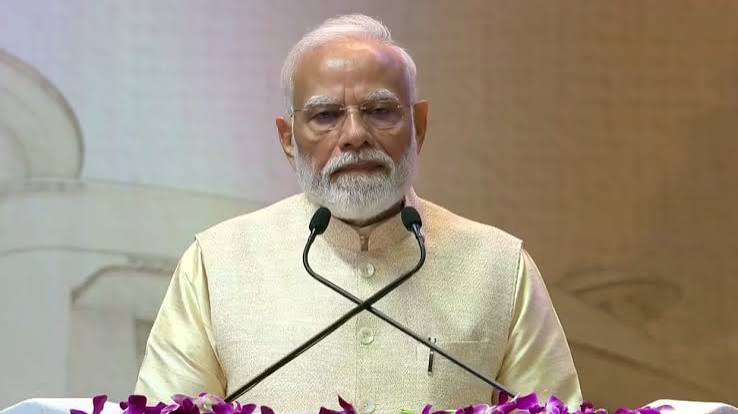
New Delhi: Prime Minister Narendra Modi on Thursday attended the centenary celebrations of the UPSC (Union Public Service Commission). During the ceremony, PM Modi said that this is not just a celebration of the UPSC's 100 years, but also a celebration of its legacy. It is also a celebration of the aspirations of millions of young people who strive to fulfill their dreams every year.
What did PM Modi say in his address?
During his address, the Prime Minister said, "In this 100-year journey, generations have changed, government positions, technology, and syllabus have changed, but trust in UPSC remains intact. This is a huge asset from all of you. I salute all the dignitaries associated with this 100-year journey and wish you all the very best."
A commemorative postage stamp was also released during the UPSC's 100th anniversary celebrations. PM Modi said, "When I was looking at the gallery here, Netaji Subhash Chandra Bose also went through the same process in 1920; all his information is here. I noticed that at that time the British ruled, but there was a Sanskrit paper, and Subhash Babu wrote the paper in Sanskrit."
Prime Minister remembers Sardar Patel:
In his address, PM Modi also remembered Sardar Vallabhbhai Patel, saying that after independence, he faced not only the challenge of keeping a country free but also the challenge of running it. Sardar Vallabhbhai Patel provided the skills infrastructure needed to rebuild the nation. He empowered this institution, making it a key pillar of independent India.
PM Modi gave suggestions regarding selection:
PM Modi said, "The youth who are being recruited today will play a crucial role in building a developed India and they will also be the biggest beneficiaries of a developed India. Therefore, we must always remember two criteria. One – country first and second – citizen first. These are the two criteria on which every selection must be tested." He said, "We must bring such youth into public service who are attracted to public service, not public office. Therefore, it is important that the recruitment exam not only tests how much the candidate knows, but also considers why these youth want to join the civil service."


.jpg "CHHATTISGARH: Ex-IRS Sheetal Shaswat Verma, who has taken VRS, gets a big responsibility!")



.jpeg "A New Milestone in Good Governance : CM Helpline Becomes the Voice of the People, Over 92,000 Complaints Registered and More Than 42,000 Grievances Resolved in Just One Month,48 Government Departments on a Single Platform; Raipur Leads Among Districts, Energy Department Tops in Grievance Redressal")