Nutrition initiative through mung beans: In 'Mann Ki Baat', PM Modi mentioned Chhattisgarh's 'Har Ghar Mung beans' campaign.
Raipur. A local initiative in Chhattisgarh to combat malnutrition has now reached the national stage. Prime Minister Narendra Modi on Sunday mentioned Chhattisgarh's "Har Ghar Munga - Ghar Ghar Munga" campaign in his popular radio program "Mann Ki Baat." The Prime Minister praised the initiative for combining locally available resources and public participation to address the nutrition challenge.
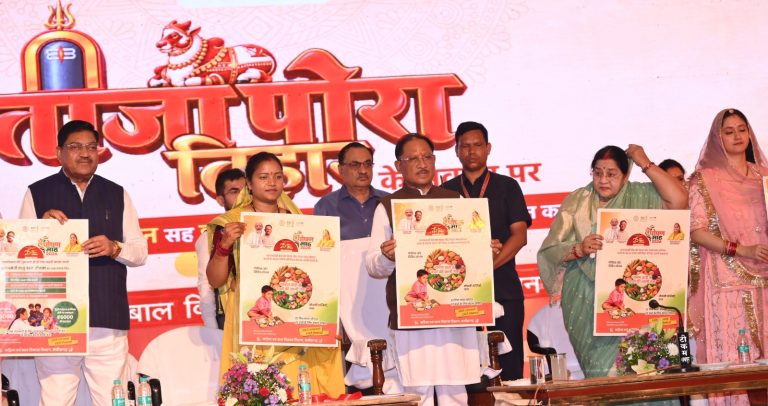
In Chhattisgarh, the month of September is being specifically used to raise awareness about nutrition. In this regard, Chief Minister Vishnu Dev Sai launched the "Munga in Every Home - Munga in Every Home" campaign on September 12th. The campaign aims to distribute mung bean plants to every household and raise awareness among families about its nutritional benefits.
Moringa, or drumstick, is readily available locally in Chhattisgarh. Rich in nutrients, Moringa is vital for health. It contains nutrients like vitamins A, C, calcium, iron, and protein, as well as medicinal properties. Incorporating Moringa into our diets as a nutritious food is a wonderful initiative. Moringa trees grow rapidly and require relatively little care. Moringa is considered an important plant for its nutritional, medicinal, and greenery. Linking local food and nutrition, the state government has made it a part of its campaign against malnutrition. The "Munga in every home, Moringa in every home" campaign has been launched, focusing specifically on the nutrition of women, children, and adolescent girls. Anganwadi centers have been made an important base for this campaign, where families are being encouraged to consume Moringa along with creating nutrition awareness.
Under the campaign 'Munga in every house, Munga in every house', Munga saplings have been distributed extensively in various Anganwadi centres, schools and homes of the people across the state, under which a total of 10 lakh 29 thousand 831 Munga saplings have been distributed across the state so far. In the districts, 25,244 saplings have been planted in Bastar district, 43,071 in Kanker district, 7,056 in Dantewada, 21,224 in Narayanpur, 15699 in Bijapur, 4,835 in Sukma, 31983 in Kondagaon, 43754 in Surguja, 19022 in Korea, 11939 in Manendragarh-Chirmiri-Bharatpur, 64599 in Surajpur, 27107 in Balrampur, 1,62271 saplings have been planted in Jashpur district.
Similarly, 23948 in Raipur district, 6420 in Mahasamund, 48833 in Dhamtari, 28398 in Balodabazar, 10527 in Gariaband, 42474 in Durg, 3480 in Rajnandgaon district, 21991 in Mohla-Manpur-Ambagarh Chowki, 39222 in Khairagarh-Chhuikhadan-Gandai, 75776 in Kabirdham, 19575 in Bemetara, 50933 in Balod, 14965 in Bilaspur, 43007 in Gaurela-Pendra-Marwahi, 57653 in Janjgir-Champa, 6425 in Sakti, 1,01,002 in Korba, 41,776 in Raigarh, 9,824 in Sarangarh-Bilaigarh, in Mungeli district 6,518 plants have been planted.
The unique feature of this initiative is that instead of relying on expensive or external resources, a locally available plant has been used as the medium for the nutrition campaign. This means that a plant planted in the courtyard of a home not only increases the nutrition in a family's diet but also becomes a means of raising awareness against malnutrition. 'Har Ghar Munga' is not seen simply as a tree planting campaign. It seeks to integrate tree planting, nutrition awareness, Anganwadi services, and community participation.





.jpeg "A New Milestone in Good Governance : CM Helpline Becomes the Voice of the People, Over 92,000 Complaints Registered and More Than 42,000 Grievances Resolved in Just One Month,48 Government Departments on a Single Platform; Raipur Leads Among Districts, Energy Department Tops in Grievance Redressal")