Now not a single development block in Chhattisgarh is in the 'critical' category of groundwater exploitation.

Chhattisgarh records largest single-cycle improvement in the history of groundwater resource assessment
There were 9 critical development blocks in 2020 and 5 in 2025, the number became zero in the year 2026.
Groundwater exploitation also declined for the first time, with annual groundwater recharge reaching an all-time high of 14.65 BCM.
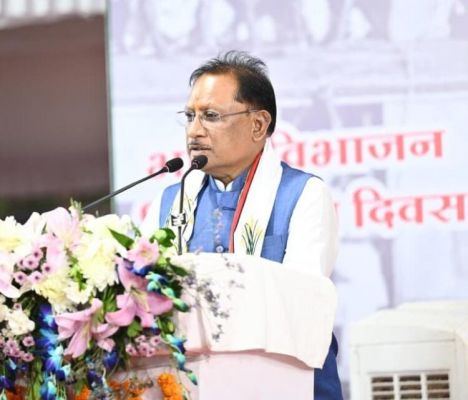
Chhattisgarh has implemented Prime Minister Shri Narendra Modi's call of 'Jan Shakti to Jal Shakti' through public participation: Chief Minister Shri Vishnu Dev Sai
The Chief Minister gave credit for the achievement to the farmers and field staff.
Raipur, September 2026/ Chhattisgarh has achieved a historic milestone in the field of water conservation and groundwater management. Now, not a single development block in the state is in the 'critical' category for groundwater exploitation. This important fact has come to light in the Groundwater Resources Assessment-2026. In the year 2020, nine development blocks of the state were in the critical category, and even in the year 2025, five development blocks remained in this category. In the year 2026 assessment, all five development blocks have come out of the critical category.
Furthermore, in this assessment cycle, improvements have been recorded in the groundwater category of 12 development blocks of the state, while the situation has not deteriorated in a single development block. This is Chhattisgarh's largest single-cycle improvement since the start of block-wise groundwater assessment. The number of protected development blocks in the state has now increased to 127.
Groundwater Resources Assessment-2026, jointly prepared by the Central Ground Water Board and the State Groundwater Survey Board, has been approved by the State Level Groundwater Assessment and Management Committee.
The Chief Minister congratulated the people of the state on this historic achievement and expressed his gratitude to Prime Minister Narendra Modi. He said that Prime Minister Modi's call for "Jal Shakti Se Jan Shakti" and his launch of the "Jal Sanchay Jan Bhagidari" campaign have given new direction and breadth to water conservation efforts in the state. With the participation of various government departments, the district administration, farmers, and ordinary citizens, water conservation efforts have now become a widespread public movement.
Public participation made the seemingly impossible goal possible: Chief Minister Shri Sai
Giving credit for this achievement to the farmers, citizens and field staff of the state, Chief Minister Shri Vishnu Dev Sai said that this result is not only the result of the government's policies, but also the result of public participation and collective resolve.
Chief Minister Shri Sai stated that this achievement was not made in Mahanadi Bhavan, but in the fields and villages. The greatest credit for this goes to the farmers of the state, including Bemetara and Rajnandgaon, who embraced changes in their farming practices to ensure water security for future generations. Our field staff also worked tirelessly with the farmers season after season. He added that, responding to Prime Minister Shri Narendra Modi's call for "Jal Shakti Se Jal Shakti," Chhattisgarh has proven that public participation can bring about significant and lasting change in groundwater conservation.
Chief Minister Shri Sai said that the Jal Sanchay Jan Bhagidari Abhiyan (Water Conservation and Public Participation) launched by Prime Minister Shri Modi provided a strong foundation for the entire government machinery to work towards a common goal. When the government's efforts to conserve water were combined with the participation of farmers and citizens, the result was this historic improvement in groundwater levels.
Groundwater recharge at a historic high of 14.65 BCM
According to the Groundwater Resources Assessment 2026, annual groundwater recharge in the state has increased to 14.65 billion cubic meters (BCM), the highest level ever. In 2017, the state's annual groundwater recharge was 11.57 BCM.
The widespread construction and revival of water conservation structures is having a direct impact on groundwater recharge. Compared to 2020, groundwater recharge from ponds and puddles has increased by 266.9 percent and recharge from other water conservation structures has increased by 202.8 percent.



.jpeg "A New Milestone in Good Governance : CM Helpline Becomes the Voice of the People, Over 92,000 Complaints Registered and More Than 42,000 Grievances Resolved in Just One Month,48 Government Departments on a Single Platform; Raipur Leads Among Districts, Energy Department Tops in Grievance Redressal")