Uniform Civil Code will strengthen social harmony, women empowerment and equal civil rights.
Raipur
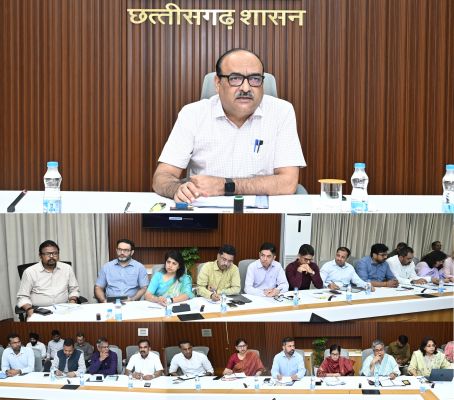
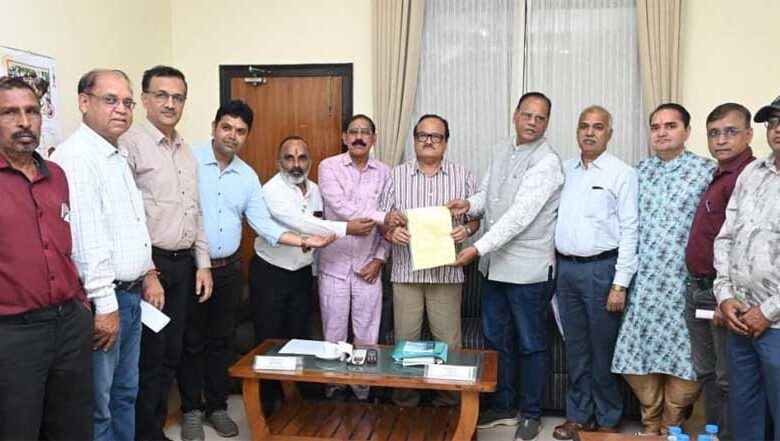
In Chhattisgarh, various social organizations are continuing their participation and public dialogue regarding the Uniform Civil Code (UCC). In this context, representatives from the Swayamprabha Foundation and Amrapali Sahakari Gruh Nirman Sanstha Maryadit, Raipur, presented important suggestions to the Uniform Civil Code Committee. Retired IAS officer Mr. M.K. Raut and senior advocate Mr. Mohan Pawar, members of the Uniform Civil Code Committee, listened attentively to the delegation's suggestions. The Committee pledged to consider them after due scrutiny and deliberation. The representatives expressed confidence that a Uniform Civil Code, drafted with broad public participation and based on the views of various communities, could prove to be a significant initiative towards social justice, women's empowerment, protection of civil rights, and strengthening social harmony.
Representatives suggested that the objective of a Uniform Civil Code should be to provide equal legal rights to all citizens, equitable protection to women, and promote equality and harmony in society. It is also essential to ensure the protection of Chhattisgarh's unique tribal culture, traditions, and constitutional rights. Mr. Shiv Narayan Mundhra, President of the Swayamprabha Foundation, and Dr. Mukesh Shah, President of the Swayamprabha Foundation, and Mr. Indranath Singh, President of the Amrapali Cooperative Housing Society Limited, presented their suggestions regarding the Uniform Civil Code. They stated that establishing uniformity in laws related to marriage, divorce, inheritance, property, and family rights would facilitate citizens' access to justice, simplify legal procedures, and develop a uniform legal system for all citizens.
Giving special priority to women's rights, the delegates stated that effective provisions should be made to eliminate social evils such as polygamy, inequalities in maintenance, and discrimination in property rights. In particular, daughters should be given equal rights in ancestral property and women should be provided equitable protection in matters of marriage and divorce.
Referring to Chhattisgarh's tribal population, the delegation stated that approximately 32 percent of the state's population belongs to tribal communities. These communities have their own unique social system, cultural identity, and centuries-old traditions. Therefore, before implementing a Uniform Civil Code, special attention should be paid to their traditions, social interests, and constitutional protections, so that the rights of any community are not adversely affected.
Suggestions were also made regarding the social and legal aspects of live-in relationships. The representatives stated that appropriate legal mechanisms for the registration of such relationships should be considered. Clear and equitable provisions are also necessary to ensure inheritance, property rights, and future security for children born from these relationships.