Education policy should come out of papers and be visible on the ground: Higher Education Minister Tank Ram Verma
Chhattisgarh government's major initiative to implement the National Education Policy (NEP-2020)
'NEP Cells' to be formed in universities, workshops to be held at division and district levels
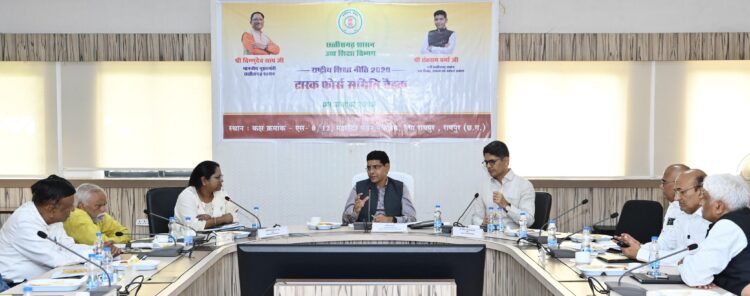
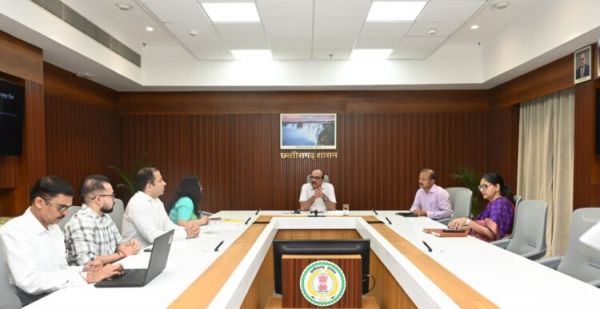
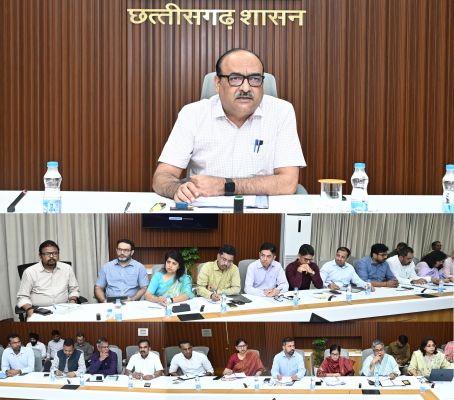
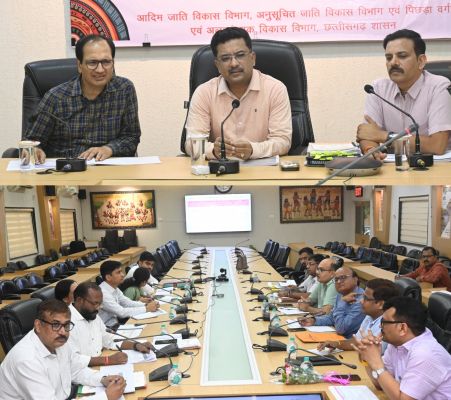
Raipur, October 9, 2026: Administrative and academic efforts have intensified at the government level to ensure the smooth, robust, and effective implementation of the National Education Policy (NEP-2020) in Chhattisgarh. The first important meeting of a high-level inter-departmental review and transformation committee was held at the ministry to ensure the smooth, robust, and effective implementation of NEP-2020 in the state's higher education institutions and to address challenges based on the experiences of the past two years.
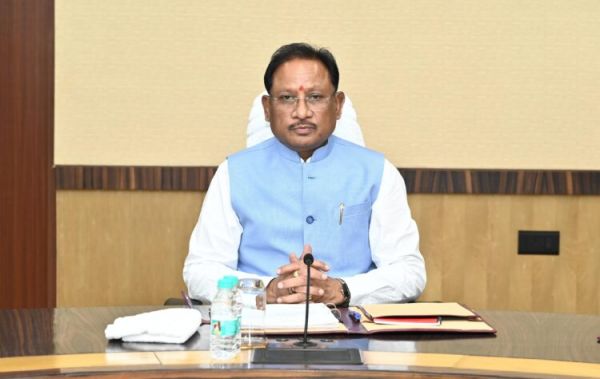
The meeting was attended by Higher Education Department Secretary Mr. Avinash Champawat, Mrs. Rita Yadav, Vice Chancellors of various universities in the state, and other senior members of the committee. Minister Mr. Tank Ram Verma clarified that the state government is committed to raising the standard of higher education, shaping the future of students, and implementing the new education policy firmly in the state.
At the meeting, Higher Education Minister Mr. Verma emphasized that the benefits of the National Education Policy 2020 are only possible when it is tangibly implemented on the ground, not confined to paperwork, meetings, and administrative files. He stated that this new education policy will play a crucial role in realizing Prime Minister Mr. Narendra Modi's vision of a "developed India" by 2047 and the Chief Minister's vision of a "developed Chhattisgarh."
Minister Verma stated that the primary objective of NEP-2020 is not simply to distribute degrees, but to provide quality education and directly connect youth with employment and self-employment opportunities. To achieve this objective, he directed the government to directly connect students with industrialists, business houses, and through corporate social responsibility (CSR) initiatives and strengthen industry-academic coordination.
Solution to practical difficulties: Training at division and district level
During the implementation of NEP-2020 over the past two years, teachers and students faced practical challenges, including confusion related to the credit system and subject selection. Minister Verma directed extensive training and awareness campaigns to address these concerns and difficulties.
Organising special workshops
Minister Shri Verma directed to organize special workshops at the beginning of every semester of the academic session in every university to make the professors and students fully aware of the details and provisions of the new education policy.
Division and district level training
At the meeting, Higher Education Minister Mr. Verma directed the organization of large-scale workshops and training programs at the divisional and district levels to improve understanding between faculty and students. Special sessions will be held to train principals, nodal officers, and brand ambassadors of all colleges affiliated with universities.
Nodal officers and brand ambassadors will be appointed to strengthen the monitoring system.
To improve administrative strength, on-the-ground monitoring, and prompt information dissemination, the government has decided to create a new framework. Each university in the state will appoint a dedicated nodal officer and two student brand ambassadors. These officers and ambassadors will coordinate between faculty and students to spread awareness and monitor the implementation of the policy. Instructions were also given to establish a dedicated "NEP Cell" in each university to promptly resolve student doubts about the policy, subject selection issues, and other administrative questions.



.jpeg "A New Milestone in Good Governance : CM Helpline Becomes the Voice of the People, Over 92,000 Complaints Registered and More Than 42,000 Grievances Resolved in Just One Month,48 Government Departments on a Single Platform; Raipur Leads Among Districts, Energy Department Tops in Grievance Redressal")