New initiative to improve education system in Vishnudev government
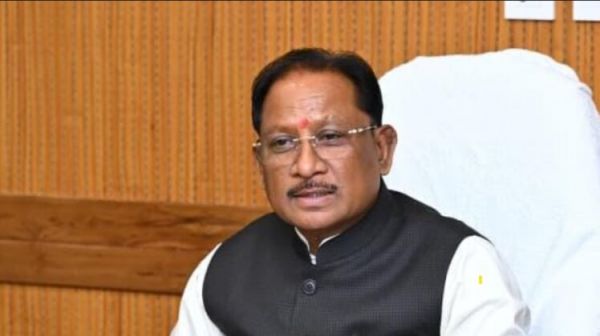
Raipur. Education is the foundation of a state's progress. The Sai government aims to ensure that every child has access to both knowledge and opportunity. "Education is the strongest foundation for a state's development. The Sai government is committed to ensuring that every child in Chhattisgarh receives a quality education and that every school has qualified teachers. The government's approval to fill 5,000 teaching positions is a major step in that direction. This decision will not only strengthen the education sector but also increase employment opportunities for the state's youth."
Rationalisation of teachers and schools
In order to make the state's school education system more robust, balanced, and quality-oriented, the state has initiated the rationalization of teacher staff. This decision was taken in accordance with the guidelines of the National Education Policy 2020 and the Right to Education Act 2009, to ensure optimal and equitable utilization of teacher resources. Currently, 30,700 government primary schools operate in the state, with a student-teacher ratio of 21.84. In 13,149 pre-secondary schools, this ratio is 26.2, which is better than the national average. Despite this, many schools continue to experience a shortage of teacher resources. Currently, 212 primary schools in the state are completely teacherless, while 6,872 primary schools are single-teacher. Similarly, 48 pre-secondary schools are teacherless, and 255 schools fall into the single-teacher category.
According to the Right to Education Act 2009, there is a provision to have 2 assistant teachers for up to 60 students in primary schools and one additional assistant teacher for every 30 additional students. In pre-secondary schools, there are 3 teachers and 1 head teacher for up to 105 students, and one additional teacher for every 35 students. In Chhattisgarh, the post of head teacher was already sanctioned in many primary schools before the implementation of the Act, hence these posts have also been included in the teacher census. The post of head teacher is not sanctioned in schools started after the year 2008.
At present, a total of 77 thousand 845 assistant teachers are working in primary schools in the state, whereas 55 thousand 692 teachers are working in pre-secondary schools. If 2-2 additional teachers are appointed in teacherless primary schools and 1-1 additional teacher in single teacher schools, then a total of 7 thousand 296 assistant teachers will be required, whereas the available surplus assistant teachers are only 3 thousand 608. Similarly, at pre-secondary level, 4 additional teachers will be required in teacherless schools, 3 in single teacher schools, 2 in two teacher schools and 1 in three teacher schools. According to this standard, a total of 5 thousand 536 teachers are required, whereas only 1 thousand 762 teachers are surplus.
This clearly shows that despite the state's adequate number of teachers, their distribution is uneven. Some schools lack teachers, while others have more than the required number of teachers. For example, approximately 1,500 primary schools employ five or more teachers. Similarly, 3,465 pre-secondary schools employ five teachers, and 1,700 pre-secondary schools employ more than five teachers. This imbalance hinders the quality of education, which can be improved through rationalization. Teachers in higher secondary and high schools are appointed according to a subject-wise setup, so the number of surplus teachers there is relatively negligible.
Regarding the rationalization process, it has been clarified that this is not a process of closing any school. In line with the cluster school concept proposed in the National Education Policy 2020, primary, pre-secondary, and higher secondary schools operating on the same campus are being rationalized. This process will involve only administrative coordination, not the abolition of any school or post. For example, if a campus has schools of all three levels, the primary and pre-secondary schools will be integrated into the higher school campus, so that better infrastructure and educational resources can be provided in the future.
Advantages of Rationalization
Deployment of surplus teachers to teacherless and single-teacher schools will become possible. The availability of additional teachers will increase. Establishment costs will decrease. Continuity of education on the same campus will reduce dropouts. Approximately 89 percent of students will not need to seek admission three times at different levels. Student retention rates will increase. Providing robust infrastructure will become easier.
This initiative by the Chhattisgarh government is a visionary and practical step towards ensuring better and equitable distribution of teacher resources. This will not only improve school functioning but also provide students with easier access to quality education. Under the leadership of Chief Minister Vishnudev Sai, another major step has been taken towards strengthening the education system in the state. The state government has approved the recruitment of 5,000 teachers. This decision is in line with Chief Minister Sai's announcement in which he expressed his commitment to strengthening the state's educational infrastructure and ensuring quality education. Chief Minister Sai stated that education is the foundation of any state's progress, and the Chhattisgarh government's objective is to ensure that every child has access to both knowledge and opportunity. He stated that this recruitment will not only accelerate the education system but will also create new employment opportunities for the youth. Chief Minister Shri Sai described the approval given by the Finance Department as a "historic step towards building a new Chhattisgarh." The Education Department will soon begin the recruitment process for the 5,000 posts. Filling up of these posts will significantly address the shortage of teachers in rural and tribal areas, leading to significant improvement in the continuity and quality of teaching.
The state government has taken several important decisions related to education reform in the past few months. The goal is to elevate the quality of education in the state to new heights through the construction of school buildings, the dissemination of digital educational materials, and teacher training programs. The shortage of teachers has long been a major challenge in the state. In many rural areas, the availability of subject-specific teachers in schools was limited. The new recruitment will strengthen the education system in these areas, providing children with the opportunity to receive a better education in their own villages and regions. Furthermore, this initiative will help bring the level of education in the state at par with the national average. Under the leadership of Chief Minister Sai, the state government is continuously investing in education, considering it the foundation of all-round development. From modernizing school infrastructure to scholarships, midday meals, and student-friendly schemes, the government's focus is on expanding the scope of education at every level. This new recruitment of teachers is part of that long-term vision, moving towards realizing the vision of a "developed Chhattisgarh." This decision will not only invigorate the education system but also pave the way for thousands of young people to realize their dreams. This initiative will prove to be a decisive step towards an "educated, capable, and self-reliant Chhattisgarh" under the leadership of Chief Minister Shri Vishnudev Sai.
Interest-free loans will be available for technical and vocational education.
Interest-free loans will be provided to children from economically weaker families to provide them with better opportunities for technical and professional higher education. Chief Minister Vishnu Dev Sai has directed maximum students in these districts to benefit from the "Chief Minister Higher Education Loan Interest Subsidy Scheme." He has called for a special campaign to be launched for this purpose. Chief Minister Sai has also directed the collectors of other districts in the state to provide children from economically weaker families with the benefit of the loan facility, offered at an interest rate of 1%, for technical and professional higher education. The maximum limit for education loans eligible for interest subsidy under the scheme is ₹4 lakh. Regular payment of loan installments is mandatory to avail the interest subsidy. Dropouts and expelled students will not be eligible for this scheme, but eligibility will remain in the event of a medical interruption in studies for a maximum period of one year.
These courses will benefit
Under the scheme, the benefit of the scheme can be availed for studying in the courses of BE/B.Tech, ME, M.Tech, D.Arch, Agriculture Engineering, MCA, MBA, DE, B.P.Ed, M.P.Ed, PGDCA, BHMS, BAMS, BNYS, BNS, BUMS, VFSC, B.Tech Dairy, B.Agri, BDS, MDS, MBBS, BVSc, B.Sc Nursing Basic and Post Basic, B. Pharma, M. Pharma, D. Pharma, Diploma in Modern Office Management, Diploma in Interior Decoration and Design, Diploma in Costume Design and Dress Making, B.Ed, D.Ed, M.Ed.