State
Prime Minister's Suryaghar Free Electricity Scheme has become the new identity of green prosperity…
Raipur: Under the leadership of Prime Minister Shri Narendra Modi and the guidance of Chief Minister Shri Vishnu Dev Sai, the Pradhan Mantri Suryaghar Free Electricity Scheme is being effectively implemented in Chhattisgarh to promote clean energy, reduce household electricity expenditure and realize the resolve of a self-reliant India in the energy sector. This scheme is not only providing relief to families from electricity bills, but is also making a significant contribution towards environmental protection and sustainable development by promoting the use of renewable energy. Through the scheme, thousands of families are setting a new example of self-reliance by adopting green energy along with economic savings.
The family of Mrs. Lara Tirki and her husband Mr. Anjulas Tirki of Patharipara in Korba city are also experiencing the positive results of solar energy by benefiting from the Pradhan Mantri Suryaghar Free Electricity Scheme. After learning about the scheme, they installed a 3 kilowatt solar rooftop panel at their home. Since the installation of the solar plant in September 2025, their household's electricity bill has been completely eliminated and has been consistently zero ever since. Earlier, their family had to pay approximately Rs. 1,000 to Rs. 1,500 per month on electricity bills, but now this amount is being saved completely.

Mrs. Tirkey explained that under the Pradhan Mantri Suryaghar Free Electricity Scheme, she received a total subsidy of 108,000 rupees from the central and state governments, making it easier for her to install a solar plant and avoid any financial difficulties. She added that this scheme is extremely beneficial for ordinary families, as it not only provides relief from electricity bills but also increases the use of clean and renewable energy. She also said that by adopting solar energy, her family is fulfilling its responsibility towards environmental protection and contributing to reducing carbon emissions.
He also appealed to the citizens of the district to take maximum advantage of the Prime Minister's Suryaghar Free Electricity Scheme and install solar rooftop systems in their homes. He said that this scheme is not only a means to reduce electricity bills, but also an important step towards economic self-reliance, energy security and environmental protection. Expressing gratitude to Prime Minister Shri Narendra Modi and Chief Minister Shri Vishnu Dev Sai for this public welfare scheme, he said that today, due to the visionary initiative of the government, positive changes are taking place in the lives of thousands of families and the dream of clean energy is becoming a reality.
The fabric of self-reliance is being woven with silk in Narayanpur, silkworm rearing has changed the fate of the villagers of the forest area….
Raipur: In Narayanpur, a forest district in Chhattisgarh, silk development and expansion schemes are creating a new story of golden change in the lives of villagers. Under the able guidance of the district administration and collector, the mulberry and tussar silk schemes have not only opened new avenues for livelihoods locally but have also economically empowered women and youth by providing them with respectable employment in their own villages.
Today, silk production in Narayanpur is not just an agriculture-supporting activity, but has become a strong pillar of women empowerment, rural development and self-reliance.
Mulberry silk: A sustainable source of income for self-help groups
Plantations covering approximately 22.5 acres have been developed at two Mulberry centers located in Narayanpur and Kusratrai. Members of women self-help groups are rearing silkworms using advanced technologies. Against a target of 4,400 kg of cocoon production for 2025-26, a successful production of 4,180 kg was achieved. More than ₹7.72 lakh was directly transferred to the bank accounts of 47 beneficiaries involved in this activity. Along with rearing silkworms, activities such as plantation protection and weeding provided employment to the villagers throughout the year.

Tussar silk: Going beyond the target, creating a new record
Tussar silkworm rearing, conducted in an area of 62 hectares in the four major tussar centers of the district, Narayanpur, Kusratrai, Gotajunhari and Edka, has touched new heights of success this year. Against the target of 8.52 lakh cocoons for the year 2025-26, a bumper production of more than 9.73 lakh cocoons was recorded. This remarkable achievement earned 64 beneficiaries a direct income of approximately 36.97 lakh rupees.
Training, Transparency and Trust: Three Pillars of Success
The Silk Department is providing villagers not only resources but also timely technical guidance. Continuous technical training is being provided to protect the worms from diseases and produce quality cocoons. Direct and transparent payments for production are made directly into the beneficiaries' bank accounts, strengthening the villagers' confidence. Similarly, women from self-help groups have played a leading role in this entire process, improving the economic well-being of their families.

This model of Narayanpur proves that if proper use of local resources, administrative guidance and hard work of the villagers come together, then a new chapter of development and self-reliance can be written even in remote forest areas. In the coming times, the expansion of these schemes will not only bring more and more rural families out of poverty, but will also give Narayanpur a unique and glorious identity on the silk map of the state.
Chief Lokayukta Uboweja presented the annual report of the commission to Governor Ramen Deka.
Raipur: Chief Lokayukta Mr. Inder Singh Uboweja met Governor Mr. Ramen Deka at Lok Bhavan here today. He briefed the Governor on the activities of the Chhattisgarh Lokayukta and presented the commission's annual report for the year 2025-26.
On this occasion, Secretary of Chhattisgarh Public Commission, Mr. Deepak Agarwal, Deputy Secretary, Ms. Chitralekha Sonwani, Legal Advisor, Mr. Ajit Kumar Rajbhanu and other officers of the Commission were present.
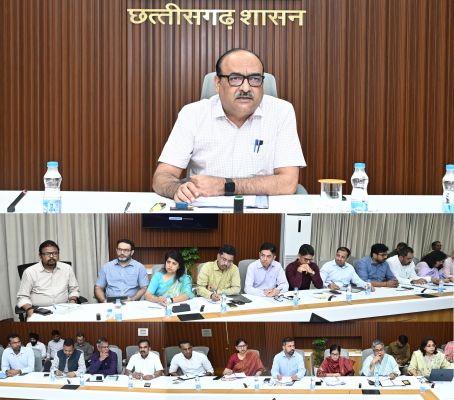
Deputy Chief Minister Vijay Sharma held a high-level review meeting to further strengthen CCTNS.
*Health Minister Shri Shyam Bihari Jaiswal directed Medlipaar to expedite the testing process*
*Emphasis on making the judicial process quick, transparent and technology based as per the new Indian Judicial Code*
Raipur. In order to effectively implement the new Indian Penal Code in Chhattisgarh and to make the judicial process technology-based, simple and quick, Deputy Chief Minister and Home Minister Mr. Vijay Sharma and Health Minister Mr. Shyam Bihari Jaiswal held a high-level review meeting of Crime and Criminal Tracking Network and System (CCTNS) on Tuesday. The meeting discussed in detail the practical challenges being faced in the operation of CCTNS, integration of various digital modules and making the judicial and police system more effective.
Deputy Chief Minister Mr. Sharma said that in accordance with the new Indian Penal Code, it is the state government's priority to ensure that crime investigations, evidence collection, judicial proceedings, and coordination between various departments are fully digital and timely. He directed that every stage of the judicial process be made more accessible, transparent, and citizen-friendly through CCTNS.
*Emphasis on effective operation of all digital modules from e-FIR to e-Forensics*
The meeting discussed in detail how to effectively integrate e-FIR, e-Challan, e-Evidence, Medlippar, e-Prison, e-Forensic, CIS, Nyay Shruti, and other digital systems with CCTNS. The Deputy Chief Minister directed officials to coordinate all these modules to make the judicial process more expeditious and transparent, ensuring speedy justice delivery to citizens.
*Special training campaign will be conducted in all districts for e-evidence*
Mr. Sharma stated that the importance of digital evidence is constantly increasing. He directed that police officers and related staff in all districts of the state be provided extensive training in the e-evidence system, so that digital evidence can be collected, preserved, and presented in court with complete efficiency. He encouraged districts performing well and urged them to take action.
*Nyay Shruti to go live soon*
The meeting also discussed the early launch of the Nyay Shruti system. The Deputy Chief Minister directed that the Nyay Shruti system be made live as soon as possible by generating the necessary IDs for all judges through the High Court, ensuring more effective use of technology in judicial processes.
*All police stations in Durg, Bilaspur and Raipur Commissionerate will have e-signing pads*
Important decisions were made at the meeting, focusing on the convenience of applicants. The Deputy Chief Minister directed that, in the initial phase, two e-signing pads be made available to all police stations in Durg, Bilaspur, and Raipur Commissionerates, and two police stations in each district of the state by the end of this month. This will simplify the process of digital signatures for complainants and make online document processing more efficient. Subsequently, the facility will be made available throughout the state.
*Emphasis on strengthening the five pillars of ICJS*
Mr. Sharma directed the strengthening of all five pillars of the Interoperable Criminal Justice System to make the justice system more effective in accordance with the new Indian Criminal Code. He said that the justice process should be made timely by establishing better coordination between the police, courts, prisons, forensics, and prosecution systems.
*District hospital to be connected to Medlipar, Health Minister assures cooperation*
At the meeting, Health Minister Shri Shyam Bihari Jaiswal assured all possible support to expedite the medical examination and reporting process. He directed health department officials to prepare an action plan to connect all district hospitals to the Medlipaar system, appoint nodal officers in each district, and conduct training. Deputy Chief Minister Shri Sharma directed that the entire system be fully operational within the next three to four months.
NCRB and NIC will jointly resolve technical issues.
The Deputy Chief Minister asked the officials of the National Crime Records Bureau (NCBR) to come to the state and ensure quick resolution of technical problems arising during onboarding by coordinating with the National Informatics Centre (NIC), so that all the services of CCTNS can operate smoothly.
*Initiative to connect private hospitals with CCTNS*
Mr. Sharma directed officials to make efforts to connect both government and private hospitals to the CCTNS system in a phased manner. This will expedite the exchange of medical evidence and the investigation process, and make the judicial process more effective. He commended the work being done under the online CCTNS system in Durg district.
Instructions for improving the functioning of FSL
During the meeting, the Deputy Chief Minister reviewed the Forensic Science Laboratory (FSL) and directed the establishment of Standard Operating Procedures (SOPs) for all types of cases and the minimization of investigation timelines. He also placed special emphasis on completing the necessary recruitment process for forensic experts quickly and significantly reducing the number of pending cases.
Principal Secretary Ms. Niharika Barik Singh, Principal Secretary Smt. Sushma Sawant, Secretary Mr. Himshikhar Gupta, Inspector General of Police Mr. Dhruv Gupta, senior officers of NCRB and CCTNS were present in the meeting virtually from Delhi and senior officers of the State Government.
Strengthen grassroots mechanisms against malnutrition and anemia, inspect Anganwadi centres daily: Minister Rajwade
00 Plant moong in every Anganwadi centre and develop a nutrition garden Treat children like your own children, nurture children in Anganwadi
00 Child marriage is a curse, save the future of children by stopping child marriage
00 Minister Smt. Rajwade held a review meeting of departmental schemes
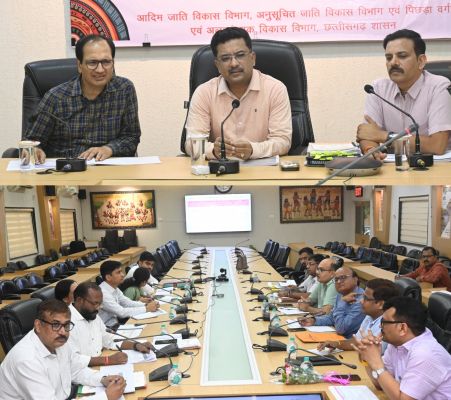
Raipur. Women and Child Development and Social Welfare Minister Smt. Laxmi Rajwade today held a detailed review meeting of Women and Child Development Department and Social Welfare Department in Surajpur district and assessed the progress of departmental schemes and programmes. Surajpur Collector Smt. Rena Jameel, District Panchayat CEO Shri Vijendra Singh Patle along with district level officers and employees of both the departments were present in the meeting.
In the meeting, Minister Smt. Rajwade, while taking information regarding the establishment of the department, reviewed the vacant posts and got information about the vacant posts of Anganwadi workers and assistants in all the projects. While reviewing the infrastructure of Anganwadi centres, she took information about buildings without buildings, those operating in rented buildings, those in need of repair, those unusable and dilapidated buildings and while reviewing the progress of the buildings under construction and the expenditure of the funds released for building repairs, gave instructions to complete all the repair works soon.
The Minister reviewed the distribution and quality of sweet Shakti diet, salty porridge production, ready-to-eat food items. He instructed the officers and employees to ensure quality by conducting regular field inspections. Laying special emphasis on upgrading Anganwadi centers, regular entry in the nutrition tracker, and ensuring children's attendance, he said that by working with strong willpower, we should achieve the goal of making the district malnutrition and anemia free.
He reviewed the progress in benefiting malnourished children and anemic women under the Malnutrition-Free Chhattisgarh Campaign, the supervision of targeted beneficiaries, and the role of selected self-help groups. Expressing concern over the malnutrition situation, he directed that nutritious food be provided to children and anemic women be identified and treated promptly.
In the meeting, the progress of Pradhan Mantri Matru Vandana Yojana, Sukanya Samriddhi Yojana, Sakhi One Stop Centre and Nava Bihan Yojana was also reviewed in detail. The Minister gave instructions for effective implementation of the schemes in all the projects and to benefit maximum eligible beneficiaries.
While reviewing the situation of child marriage in the district, Minister Smt. Rajwade gave instructions for adopting an effective strategy to stop child marriage. She said that by giving special training to Sarpanchs and Secretaries, action should be ensured to stop child marriage at the initial stage of marriage. Along with this, adolescents should be made aware about the ill effects of early marriage.
Emphasizing the need to plant a moong plant in every home and to develop a nutrition garden with moong, green vegetables, and other herbs in every Anganwadi center, he said that malnutrition can be effectively addressed by harnessing the nutritional value of moong. He instructed that Anganwadi centers should maintain cleanliness, regularly clean toilets, dress children in clean clothes, and make parents aware of cleanliness.
Minister Smt. Laxmi Rajwade said that to improve the system, it is essential to fully activate the system at the grassroots level. Only when officers and employees regularly work in the field will effective solutions to problems like malnutrition and anemia be possible. She directed that each officer inspect at least five Anganwadi centers daily and ensure that all centers operate regularly, nutrition gardens are developed there, and quality nutritious food is being provided to children.
She said that the objective of Anganwadi centres is to ensure the overall development and a better future of children. All officers and employees should work responsibly, nurturing children as if they were their own children. Effective implementation of schemes will be the basis for building a malnutrition and anemia-free Surajpur, which will lead to the creation of strong and healthy families.
Apart from this, during the review of the Social Welfare Department, Minister Smt. Rajwade took information about the progress of various schemes including Social Assistance Programme, Social Security Pension Scheme, Sukhad Sahara Scheme, Disabled Pension Scheme, physical verification of pension beneficiaries, distribution of assistive devices to the disabled, Disabled Marriage Incentive Scheme and Disabled Scholarship Scheme and gave instructions to provide the benefits of the schemes to the eligible beneficiaries on time.
Mangaldas Thakur nominated as Vice Chairman of Chhattisgarh State Scheduled Tribe Commission
Raipur / The state government has nominated Mr. Mangaldas Thakur of Chhuriya Dongri village, Rajnandgaon district, to the position of Vice Chairman of the Chhattisgarh State Scheduled Tribes Commission. An order to this effect has been issued from the Ministry of Tribal Development, Mahanadi Bhawan.
Our biggest responsibility is to shape the future of the new generation: Chief Minister Sai
Raipur. The purpose of education is not just to score good marks in exams, but to develop moral values, scientific thinking, social sensitivity, and a sense of nationalism in children. Education is the strongest foundation for building a cultured society, a strong nation, and a developed Chhattisgarh. The state government is committed to ensuring that no child in the state is deprived of their dreams due to lack of resources or opportunities. By providing quality education, modern infrastructure, technical resources, and equal opportunities, the state's new generation is being prepared for future challenges. Chief Minister Shri Vishnudev Sai said this while addressing the state-level School Entrance Festival 2026-27 held today at Swami Atmanand Government Excellent English Medium School, Jamgaon (M), located in Patan development block of Durg district.
At the beginning of the Shala Praveshotsav programme, Chief Minister Shri Vishnudev Sai warmly welcomed the little children taking admission in the school for the first time by applying tilak and offering them sweets. While blessing the children with affection, he said that they should study diligently, dream big and bring glory to their family, society, state and country with their knowledge, talent and values. He said that the smile of the children and the dreams in their eyes are the foundation of a bright future of a developed Chhattisgarh.

Chief Minister Shri Vishnudev Sai distributed free textbooks, uniforms, and school bags to selected students of classes 1, 6, and 9. He also provided bicycles to ninth-grade girl students, urging them to continue their pursuit of higher education. Honoring students who excelled in the National Means-cum-Merit Scholarship Examination 2025-26, Chief Minister Shri Sai stated that talent is not limited to any field or situation; all that is needed is the right opportunity and proper guidance.
In his address, Chief Minister Shri Vishnudev Sai stated that the state government is not limited to merely improving the education system, but is also modernizing and inclusive, tailored to future needs. Through smart classes, timely distribution of free books and uniforms, supplementary nutritious meals, regular parent-teacher meetings, invitation feasts, and various innovations based on Indian culture, an environment for the all-round development of children is being created in the state's schools.
He stated that the state government has made historic reforms in the education system through rationalization. Today, no school in the state is without a teacher. Continuous efforts are being made to provide quality education to remote and forested areas. Education hubs are being developed in areas like Jagargunda in Bastar, so that children there can also access educational facilities similar to those in larger cities. He stated that 15 medical colleges currently operate in the state, 24 Nalanda campuses have been developed, and a 200-seat hostel facility has been provided for students studying in Delhi.
Chief Minister Shri Sai made four important announcements related to education and sports infrastructure for Durg district. He announced the construction of a modern composite office building to replace the offices of the Joint Director of Education, District Education Officer, and Block Education Officer of the Education Department. He also announced the construction of a fully equipped modern auditorium, a football field and athletics track for sports talent, and 100-seater boys' and girls' hostels for students preparing for competitive exams like NEET and JEE in Durg city. He stated that these decisions will provide a better environment for the growth of talent in both education and sports.
Chief Minister Mr. Sai visited the school's astronomy laboratory and praised the models related to space science and astronomy prepared by the students. He said that scientific thinking and innovation will be the hallmarks of future India and the state government is continuously working to increase children's interest in science and technology.
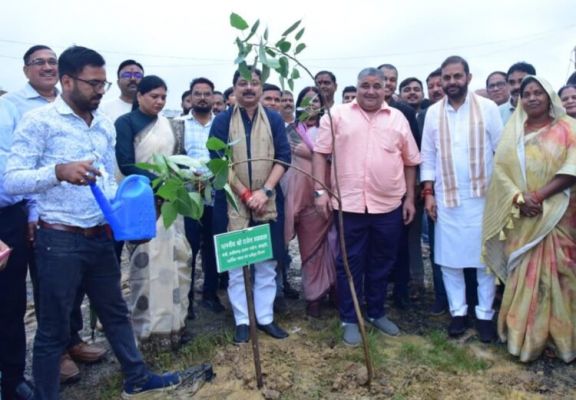
On this occasion, Chief Minister Shri Vishnudev Sai and School Education Minister Shri Gajendra Yadav, under the "Ek Ped Maa Ke Naam" campaign, planted jackfruit, sindoori, and maulshree saplings on the school campus, spreading the message of environmental protection. The Chief Minister also participated in a feast with school children, engaging in cordial conversations about their studies, interests, and future aspirations.
Students who excelled at the state-level National Means-cum-Merit Scholarship Examination were also honored at the event. Chief Minister Shri Sai honored Ms. Payal Rajni, who secured first place in the state, Naitik Amte, who secured seventh place, and Ms. Shraddha Indoria, who secured tenth place, and wished them a bright future.
Addressing the event, School Education Minister Shri Gajendra Yadav said that the state government is giving top priority to quality education and is gradually expanding computer education in schools. Innovations such as the construction of over 8,000 new toilets for girls, special campaigns to enhance language and mathematical proficiency, and connecting students with Indian culture and the lives of great men are giving the education system a new direction. He said that the government's goal is to ensure that in the coming years, on the lines of private schools, all students will have access to books and uniforms on the very first day of the academic session. Present
on the occasion were Durg Rural MLA Shri Lalit Chandrakar, Saja MLA Shri Ishwar Sahu, Chairman of the Chhattisgarh Khadi and Village Industries Board Shri Rakesh Pandey, Chairman of the Oil Mill Development Board Shri Jitendra Sahu, School Education Secretary Dr. Kamalpreet Singh, Durg Division Commissioner Shri Satyanarayan Rathore, Inspector General of Police Shri Abhishek Shandilya, Commissioner of Comprehensive Education Smt. Kiran Kaushal, Collector Shri Abhijeet Singh, public representatives, officials, parents, and a large number of students.
Smart Meters: The next natural step in the evolution of electricity meters
Feature Article - Govind Patel (Deputy General Manager Public Relations), Chhattisgarh State Power Companies, Raipur)
In today's world, information is the greatest power. Those who have accurate and timely information can make better decisions. Smart meters provide electricity consumers with this ability. They allow them to understand, analyze, and control their electricity consumption as needed. I remember my old Maruti 800 car. It had only a petrol indicator along with a kilometer meter. This only indicated the vehicle's mileage and remaining fuel consumption. However, the smart digital dashboards of today's cars provide real-time information about the vehicle's mileage, the speed at which fuel consumption is increasing, and the distance it can travel. With increased information, vehicle control has also improved.
The electricity meter has had a similar journey. When electricity first reached homes in the nineteenth century, many consumers were charged based on the number of bulbs. Later, mechanical meters were developed. Electro-mechanical meters were widely used in India for a long time. These consisted of rotating discs that recorded electricity consumption. There was a time when electricians went door-to-door with diaries, taking readings. This system was useful for its time, but the possibility of human error remained. Later, electronic meters were introduced, significantly reducing the possibility of tampering. Multi-function digital meters were developed, which, along with electricity consumption, also recorded technical information such as voltage and maximum demand. A system for generating instant bills was also developed. Despite this, a shortcoming remained: consumers only learned how much electricity they had consumed at the end of the month. They lacked the opportunity to monitor and control their daily consumption.
This is where the need for smart meters was realized. In 2001, Italy began using smart meters on a large scale. Today, smart meters have become an important part of the electricity system in most developed and many developing countries. The biggest difference between traditional meters and smart meters is the flow of information. Data from smart meters reaches the company's servers. Where this feature is available, consumers can also view details of their electricity consumption through a mobile app. This means that electricity information is no longer solely in the hands of the power company, but is also in the hands of consumers.
Our biggest responsibility is to shape the future of the new generation: Chief Minister Vishnudev Sai
Quality education is the strongest foundation of a developed Chhattisgarh: Chief Minister Shri Vishnudev Sai
Newly admitted children were given a warm welcome at the state level school entrance festival.
Durg district receives four major educational and sports infrastructure gifts: hostel for NEET-JEE students, modern composite office building, auditorium and athletics track announced
Raipur, July 2026/ The purpose of education is not just to score good marks in exams, but to develop moral values, scientific thinking, social sensitivity, and a sense of nationalism in children. Education is the strongest foundation for building a cultured society, a strong nation, and a developed Chhattisgarh. The state government is committed to ensuring that no child in the state is deprived of their dreams due to lack of resources or opportunities. By providing quality education, modern infrastructure, technical resources, and equal opportunities, the state's new generation is being prepared for future challenges. Chief Minister Shri Vishnudev Sai said this while addressing the state-level School Entrance Festival 2026-27 held today at Swami Atmanand Government Excellent English Medium School, Jamgaon (M), located in Patan development block of Durg district.
At the beginning of the Shala Praveshotsav programme, Chief Minister Shri Vishnudev Sai warmly welcomed the little children taking admission in the school for the first time by applying tilak and offering them sweets. While blessing the children with affection, he said that they should study diligently, dream big and bring glory to their family, society, state and country with their knowledge, talent and values. He said that the smile of the children and the dreams in their eyes are the foundation of a bright future of a developed Chhattisgarh.
Chief Minister Shri Vishnudev Sai distributed free textbooks, uniforms, and school bags to selected students in classes 1, 6, and 9. He also provided bicycles to ninth-grade girl students, urging them to continue their pursuit of higher education.
While felicitating the students who performed excellently in the National Means Cum Merit Scholarship Examination 2025-26, Chief Minister Shri Sai said that talent is not dependent on any field or situation, all that is needed is the right opportunity and proper guidance.
In his address, Chief Minister Shri Vishnudev Sai said that the state government is not limited to merely improving the education system, but is also making it modern and inclusive in accordance with future needs. In the state's schools, an environment for the all-round development of children is being created through smart classes, timely distribution of free books and uniforms, additional nutritious meals, regular parent-teacher meetings, invitation feasts, and various innovations based on Indian culture.
He said that the state government has made historic reforms in the education system through rationalization. Today, no school in the state is without a teacher. Continuous efforts are being made to provide quality education to remote and forested areas. Education hubs are being developed in areas like Jagargunda in Bastar, so that children there can also access educational facilities similar to those in larger cities.
He said that currently 15 medical colleges are operating in the state, 24 Nalanda campuses have been developed and hostel facility of 200 seats has been provided for the students studying in Delhi.
Incorporation of values along with education is the foundation of a prosperous Chhattisgarh – Revenue Minister Tank Ram Verma
An amount of Rs 3 crore has been approved for the construction of additional classrooms in 11 schools of Balodabazar Assembly constituency.
Raipur, July 2026 / Revenue Minister Shri Tank Ram Verma said that the integration of values with education is the true foundation of a prosperous and developed Chhattisgarh. Chief Minister Shri Vishnu Dev Sai's government is prioritizing quality, modern, and cultured education in the state, so that future generations can connect with their culture and become responsible citizens. To connect students with Indian knowledge traditions, moral values, and discipline, prayers, Saraswati Vandana, and shlokas have been incorporated in state schools. He approved an amount of Rs. 3 crore for the construction of additional classrooms in 11 schools in the Balodabazar assembly constituency.
The block-level school admissions festival concluded amid an enthusiastic atmosphere at the Government BNB Higher Secondary School in Tilda block of Raipur district. Revenue Minister Shri Tank Ram Verma, regional public representatives, district panchayat representatives, and education department officials were present as chief guests. On this occasion, students were encouraged to pursue a life path guided by quality education, the National Education Policy 2020, and ethical values.
Success is achieved only through determination
Quoting the thoughts of former President of India, Bharat Ratna Dr. A.P.J. Abdul Kalam, Revenue Minister Shri Verma said that dreams are not what we see while sleeping, but dreams are those that do not let us sleep. The foundation of success rests on big dreams and determination. Just as a parent dreams of a bright future for their children, a teacher dreams of the excellence of his school, and a public representative dreams of the development of his area, similarly, students should also set high goals and work hard continuously. Echoing Prime Minister Shri Narendra Modi's mantra of 'Sankalp Se Siddhi', he urged students to keep striving.
Attitude changes the direction of life
The program instilled immense energy and a positive attitude in the students by reminding them of Swami Vivekananda's message: "Arise, awake and stop not till the goal is achieved." Through an inspiring incident, Minister Verma clarified that people doing the same work may have different perspectives. Just as the positive-minded worker among the three laborers engaged in dam construction saw his work as linked to public welfare and prosperity, similarly, students too must set the objective of their studies. When the vision is clear, achieving the goal is certain.
New Education Policy 2020 – Incorporation of Indian knowledge tradition and values
Minister Shri Verma stated that the Vishnu Dev Sai government is taking steps to promote the all-round development of education. Under the National Education Policy 2020, education in the state has been integrated with modern technology as well as the Indian knowledge tradition (Vedas, Shastras, Ramayana, and our rich cultural heritage). Education is no longer limited to bookish knowledge; it is becoming a means of inculcating moral values, humility, discipline, and respect for parents and elders in children.
Approval of Rs 3 crore for making the schools of Balodabazar model
Speaking on regional infrastructure development, Revenue Minister Mr. Verma said that schools in the Balodabazar Assembly constituency are being developed as fully equipped model schools. An amount of Rs. 3 crore has been approved for the construction of additional classrooms in 11 schools in the Balodabazar Assembly constituency. Basic amenities such as boundary walls, toilets, clean drinking water, electricity, and seating arrangements are being completed on a priority basis. Approval was also given for the construction of a modern and grand theatre on the BNB Higher Secondary School campus for the cultural and intellectual development of students.
CG Weather Update: Heavy rain will occur in many districts of the state today, the Meteorological Department has issued orange and yellow alerts.
Raipur. CG Weather Update: Monsoon activities continue to be active in Chhattisgarh. According to the Meteorological Department, rain is likely to continue in most parts of the state on Tuesday as well. Many districts, including the capital Raipur, have been receiving continuous rainfall for the past few days, affecting normal life. The Meteorological Department has issued yellow and orange alerts in various districts of the state for the next 24 hours. In view of the possibility of heavy rain in some districts of the northern division, special caution has been advised.
According to the department, an orange alert has been issued for Kanker, Dhamtari, Balod, and Balrampur districts. A yellow alert has been declared for most other districts in north, central, and south Chhattisgarh, with the possibility of thunderstorms and heavy rain at some places.
According to meteorologists, the influence of a low-pressure area over the northwest Bay of Bengal and the adjacent coasts of northern Odisha and West Bengal has kept the state consistently moist. Consequently, light to moderate rain is expected in most areas, with heavy rainfall expected in some places.The capital city of Raipur is expected to remain cloudy throughout the day. Several areas of the city may experience thunderstorms and rain. The Meteorological Department has advised residents to exercise caution during inclement weather, avoid waterlogged areas, and avoid open spaces when lightning is suspected. The administration has also directed the relevant districts to remain vigilant and maintain necessary preparations to deal with any emergency.
Expedite AgriStake registration, resolve pending revenue cases in a timely manner: Collector Vyas
Jashpurnagar . Collector Rohit Vyas today held a joint review meeting of the officers of Agriculture, Revenue, Cooperation and Food Department in the Collectorate meeting room and reviewed the progress of various schemes and pending cases in detail. In the meeting, he gave necessary guidelines on various subjects including farmer registration on AgriStake portal, resolution of pending revenue cases, availability of fertilizers, Kisan Credit Card, distribution of food grains in fair price shops and e-KYC of ration card beneficiaries. Additional Collector Pradeep Sahu, all Sub-Divisional Officers (Revenue), Tehsildar, Naib Tehsildar and district and development block level officers of the concerned departments were present in the meeting.
Agristec registration is the top priority of the government, pending cases should be resolved soon:
Collector Rohit Vyas, while reviewing the progress of online registration of farmers on the Agristek portal in the meeting, said that registration of farmers is among the top priorities of the government. He directed that all pending registration cases be resolved quickly on a priority basis. He directed the SADO and RAEO of the Agriculture Department to coordinate with the officials of the Revenue Department and launch a campaign to complete the registration work. He also asked all SDMs to regularly monitor the progress and ensure that the set targets are met on time.
There should be no unnecessary delay in revenue cases of public interest:
In the meeting, the Collector reviewed pending revenue cases, including name transfers, diversions, land acquisition, demarcation, error corrections, ownership planning, RBC 6-4, and other pending cases. He directed officials to ensure quality resolution of all cases within the stipulated timeframe.
He stated clearly that unnecessary delays in matters concerning ordinary citizens are unacceptable. All officials should work with transparency and accountability and provide timely revenue services to the public.
Ownership plan and digital revenue services reviewed:
The Collector also reviewed the progress of the Swamitva Yojana, the Village Survey, Aadhaar entries in the Farmer's Book, record verification through digital signatures, land map updates, land distribution record corrections, and error corrections. He directed that all pending tasks be completed within the stipulated timeframe so that citizens can benefit from digital and transparent revenue services.
Maintain availability of fertilizers, farmers should not face any problem:
During a review of the Agriculture Department, the Collector directed officials to ensure adequate storage and timely distribution of fertilizers in the district. He said that farmers should not face any problems in accessing fertilizers during the Kharif season and that all committees should have adequate fertilizers available.
Expedite the installation of Kisan Credit Cards and Micro ATMs:
During the review of the cooperative department, the collector enquired about the progress of Kisan Credit Card making and gave instructions to speed up the work. While reviewing the status of installation of micro ATMs in the primary agricultural credit societies, he said that before the start of the upcoming paddy procurement, the process of installation should be completed immediately in those societies where micro ATMs are not available. He said that availability of micro ATM facility will facilitate the farmers in withdrawing their money easily after the sale of paddy. The progress of formation of fisheries and milk production societies was also reviewed in the meeting and instructions were given to complete the necessary action soon.
Ration distribution should be done only through biometric authentication:
During a review of the Food Department, the Collector inquired about the status of food grain storage and distribution at government fair price shops operating in all development blocks of the district. He directed officials to ensure 100% timely distribution of all essential food grains, including rice, sugar, and salt. He also directed to expedite the e-KYC process for ration card holders and ensure that e-KYC for all eligible beneficiaries be completed in a timely manner. Collector Vyas directed that ration distribution at government fair price shops be conducted only through biometric thumb authentication. He clarified that the use of biometric systems, rather than OTP-based distribution, should ensure a more transparent and systematic food distribution process.
Purchase from cooperative societies at the rates fixed by the government, avoid unnecessary storage and rumours: Agriculture Department
Jashpurnagar. To ensure that farmers do not face any problems during the sowing of Kharif crops, adequate stock of chemical fertilizers and certified seeds has been arranged in all the cooperative societies of Jashpur district.
The Agriculture Department has appealed to farmers not to pay heed to any rumours and to purchase fertilizers and seeds from their nearest cooperative society at the government-fixed price. Deputy Director of Agriculture MR Bhagat said that a total of 5056.740 metric tonnes of chemical fertilizers are currently available in the district. This includes sufficient stock of 2283.140 metric tonnes of urea, 1401.050 metric tonnes of DAP, 524.540 metric tonnes of NPK, 467.500 metric tonnes of super phosphate and 380.510 metric tonnes of muriate of potash. In addition, to promote balanced and modern use of fertilizers by farmers, 5,124 bottles of nano urea and 6,421 bottles of nano DAP, a total of 11,545 bottles, have also been made available at cooperative societies.
Providing information on seed availability, the Agriculture Department stated that 1454 quintals of paddy, 88 quintals of pigeon pea, 457.64 quintals of black gram, 10 quintals of groundnut, 8.14 quintals of ramtil, and 0.72 quintals of sesame certified seeds are available in the district through cooperative societies and the Agriculture Department. The Agriculture Department has urged farmers to purchase fertilizers and seeds as per their needs from their nearest cooperative society. The department has clarified that there is no shortage of fertilizers and seeds in the district and that adequate availability of all essential agricultural inputs has been ensured. The Deputy Director of Agriculture has appealed to farmers to purchase fertilizers and seeds only at the government-prescribed rates and to avoid unnecessary hoarding or misleading rumors. He stated that the Agriculture Department is fully committed to providing quality agricultural inputs to farmers in a timely manner so that sowing and production of Kharif crops are not affected.
The improved green gram variety GAM-5 will change the fortunes of the farmers of the region.
Raipur In Chhattisgarh, the Agriculture Department and the Chhattisgarh State Seed and Agricultural Development Corporation provide free mini-kits of certified improved seeds to farmers. GAM-5 is an excellent and high-yielding mung bean variety that matures in 60-65 days and is resistant to yellow mosaic (YMW) disease. To promote mung bean sowing, the Agriculture Department is providing certified mung bean seeds to farmers at a subsidized rate. Under the Agriculture Department's ATMA scheme, continuous guidance and technical support is being provided to farmers in the region to connect them with modern farming techniques and promote advanced agricultural practices. In this regard, a local farmer in Ambikapur, with the support of the Agriculture Department, has set a new example in the region by sowing improved mung bean seeds.
Under the ATMA scheme, ATM (Agricultural Technical Manager) Anju Adile and BTM (Block Technical Manager) Kanchan Kushwaha provided the farmer with free seeds of the improved mung bean variety GAM-5. Under the supervision of departmental officials, the farmer sowed the seeds in his field using the line sowing method. During sowing, agricultural experts also shared detailed technical information with the farmer regarding field preparation, seed treatment, sowing at appropriate spacing, and crop management.
Sharing his experience, the farmer explained that line sowing is far more beneficial than traditional farming (the broadcast method). This modern technique ensures uniform and balanced plant growth. Crop care and weeding become easier. Plants receive adequate sunlight and air, greatly reducing the likelihood of pest and disease infestations. The farmer expressed hope that this technique will significantly increase both crop production and quality.
Mung bean is a pulse crop that matures in a very short period. It's low-cost, yet has the potential to provide farmers with a better income. According to the farmer, receiving free improved seeds and timely technical guidance through the ATMA scheme has further strengthened his confidence in adopting modern farming. Expressing gratitude to the Agriculture Department, the farmer said that the officials' constant guidance and encouragement are inspiring other farmers in the area to adopt new agricultural techniques. He is confident that this initiative will prove to be a great source of inspiration for other farmers in the region in the future.
Quality health services are the top priority of the government: Deputy Chief Minister Sharma
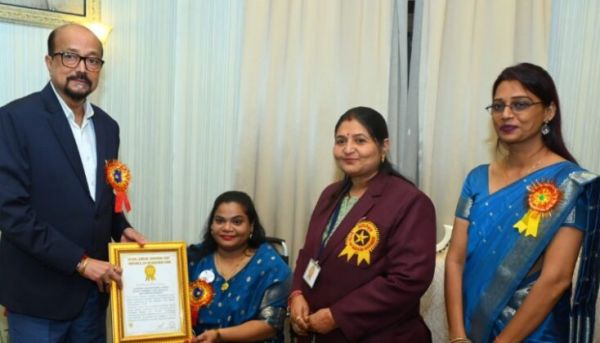
Raipur - Deputy Chief Minister Shri Vijay Sharma presented National Quality Assurance Standards Certificate to eight health institutions of the district in a program organized in Kawardha. On this occasion, he said that the aim of the state government is to provide quality and accessible health services to every citizen. He said that National Quality Assurance Certification is not just an achievement but a proof of better functioning of health institutions and sensitive services towards patients. Deputy Chief Minister Shri Vijay Sharma presented National Quality Assurance Standards Certificates to Ayushman Arogya Mandir Palansari, Minminiya, Gochhiya, Virendranagar, Gaurmati, Dharamgarh, Gendpur and Ranjitpur.
Sixty government health institutions in Kabirdham district have achieved significant health care achievement by receiving the National Quality Assurance Standards certification. This certification is a testament to the excellent quality of health services and patient-centered care provided by these institutions. It is awarded to institutions that meet rigorous standards for service provision, patient rights, support services, diagnostic services, infection control, and quality management.
National Quality Assurance Standards require healthcare institutions to undergo extensive preparations according to a prescribed checklist. District and state-level teams then inspect the institution, reviewing documents, conducting interviews, assessing cleanliness, availability of essential medicines and testing kits, building condition, water and electricity supply, and patient facilities. Only after achieving a score of more than 70 percent in each standard can an institution apply for national-level certification on the Saksham portal.
In the financial year 2025-26, the state government had given the target of preparing 73 health institutions of the district for certification. Against this, Kabirdham district has achieved the first position in the state by starting the work of quality improvement in 91 government health institutions (125 percent). Out of these 91 health institutions, National Quality Assurance certification of 60 institutions has been completed, while the results of 12 institutions are pending and preparations are going on in 19 institutions. In these, certification of District Hospital, Community Health Center Pandariya, one urban primary health center, five primary health centers and 52 sub health centers has been completed.
After being certified by the National Quality Assurance Standard, an incentive of Rs 2.16 lakh is provided to sub-health centres, Rs 3 lakh to primary health centres, while Rs 10,000 per bed is provided to community health centres and district hospitals every year for three years. This amount is used for upgrading health institutions and providing better facilities to patients. On this occasion, District Panchayat President Shri Ishwari Sahu, District Panchayat Member Shri Ram Kumar Bhatt, Dr. Virendra Sahu, Shri Nitesh Agrawal, Municipal Council President Shri Chandra Prakash Chandravanshi, Municipal Council Vice President Shri Kailash Chandravanshi, Collector Shri Gopal Verma along with public representatives, officers-employees and a large number of citizens were present.
Chief Minister Vishnudev Sai warmly welcomed the newly admitted children.
Raipur The Swami Atmanand Government Excellent English Medium School, Jamgaon (M), located in Patan development block of Durg district, was held in an enthusiastic and dignified atmosphere. The chief guest of the program was Chief Minister Shri Vishnudev Sai. Organized in the august presence of School Education Minister Shri Gajendra Yadav, the program was attended by Durg Rural MLA Shri Lalit Chandrakar, Saja MLA Shri Ishwar Sahu, Chairman of Chhattisgarh Khadi and Village Industries Board Shri Rakesh Pandey, Chairman of Oil Mill Development Board Shri Jitendra Sahu, School Education Secretary Dr. Kamalpreet Singh, Durg Division Commissioner Shri Satyanarayan Rathore, Inspector General of Police Shri Abhishek Shandilya, Commissioner of Comprehensive Education Smt. Kiran Kaushal and Collector Shri Abhijeet Singh. A large number of public representatives, officials, parents and students also participated in the program.
Chief Minister Shri Vishnudev Sai and the guests warmly welcomed the children taking admission in the school for the first time by applying tilak and offering them sweets. He distributed books and uniforms to the selected students of class 1st, 6th and 9th and gave cycles to the eligible girl students of class 9th. The newly admitted students of class 1st included Bhupendra Singh Pahadi, Parth Yadav, Veer Chandrakar, Vivaan Thakur, Yash Markande, Dali Sinha, Divyanshi, Lavanya Sahu, Lishika Chandrakar and Manvi Sen. While wishing all the children, the Chief Minister said that they should study diligently and bring glory to the society and the state with their knowledge, talent and values.
Addressing the program, Chief Minister Shri Vishnudev Sai stated that education is the key to development and the state government is committed to providing quality education to every child. He emphasized that education is not just a means to obtain a government job, but also the strongest foundation for social service, nation-building, and success in life. He explained that several innovative initiatives are being implemented in the state, such as smart classes, timely distribution of books and uniforms, additional nutritious meals, regular parent-teacher meetings, and invitation feasts. Chief Minister Shri Sai stated that the state currently operates 15 medical colleges and 24 Nalanda campuses have been developed. A 200-seat hostel has been established for students studying in Delhi. He added that after rationalization, no school in the state is without a teacher, and new educational centers are being developed in remote areas, including Bastar. An education hub is being developed in Jagargunda, which will provide better opportunities for quality education to the children there. Referring to the ancient Gurukul tradition, he said that the importance of education has always been paramount, and the state government strives to ensure that no child in the state is deprived of education. Chief Minister Shri Sai said that through the National Education Policy-2020, implemented under the leadership of Prime Minister Shri Narendra Modi, special emphasis is being placed on inculcating values, skills, and employment-oriented education along with academics. In the last two and a half years, many innovations have been made in the field of education, and the future will be the era of Artificial Intelligence (AI). In the coming time, smart classes will be started in 9,000 schools across the state. The Chief Minister informed that a 200-seater Tribal Youth Hostel is being operated in Delhi for tribal youth preparing for competitive examinations, where 13 students have succeeded in prestigious examinations like the UPSC this year. He urged parents to connect their children with education and motivate them to take competitive exams.
School Education Minister Shri Gajendra Yadav said that the state government is implementing numerous innovations to continuously improve the quality of education. The Education Quality Campaign has yielded positive results, and board exam results have also been remarkable. He said that computer education is being developed in all schools in the state in a phased manner. Special efforts are being made to improve Hindi proficiency at the primary level, English proficiency at the middle level, and mathematics proficiency. He also informed that more than 8,000 toilets are being constructed for girls.
Durg district received four major gifts of education and sports infrastructure.
Chief Minister Shri Vishnudev Sai made four important announcements at the event to strengthen the education and sports infrastructure in Durg district. He announced the construction of a modern composite office building to replace the Education Department's JD, DEO, and BEO offices, a fully equipped auditorium in Durg city, a football field and athletics track for sports talent, and the establishment of 100-seater boys' and girls' hostels for students preparing for NEET and JEE. Students who excelled at the state level in the 2025-26 National Means Cum Merit Scholarship Examination were honored at the event. Among them, Ms. Payal Rajni (PM Shri Vidyalaya, Kumhari) secured first place in the state, Naitik Amte (PM Shri Vidyalaya, Kumhari) secured seventh place, and Ms. Shraddha Indoria (SEGES, Janjgiri) secured tenth place in the state. The Chief Minister and guests honored them and wished them a bright future.
FIFA WORLD CUP 2026: Spain becomes world champion after 16 years!
Raipur Desk. The 16-year wait is finally over. Spain has won the 2026 World Cup. In the final played in New Jersey, Spain defeated defending champions Argentina 1-0. No goals were scored for the entire 90 minutes, but in extra time, Ferran Torres scored a goal that made Spain the world champions once again
With this victory, Spain lifted the World Cup trophy for the second time since 2010. Argentina's dream of becoming champions for the second consecutive time was shattered.
With the victory, Spain not only won the trophy but also a record prize money of $51 million, or approximately ₹440 crore (approximately ₹440 crore). Runner-up Argentina received approximately ₹293 crore (approximately ₹293 crore).
This time, FIFA distributed approximately ₹7,500 crore in prize money among 48 teams. Notably, no team returned empty-handed from the tournament. FIFA also covered all the teams' participation, preparation, travel, and accommodation expvide.