State
CHHATTISGARH: Do you have an old manuscript at home? Now the government has called you.
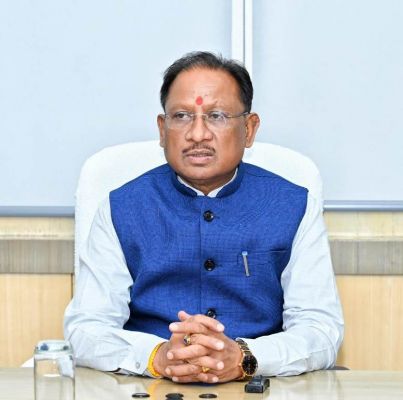
Raipur. A major campaign is underway in Chhattisgarh to preserve and digitize old manuscripts stored in every household. Chief Minister Vishnudev Sai himself has appealed to the people of the state: If you have any old texts, palm leaves, or handwritten manuscripts, don't hide them, but bring them to the fore.
CM Sai said that these manuscripts are not just paper, but the true identity of our culture and knowledge. If they are not preserved now, future generations will be deprived of this heritage.
These are now being digitised under the Central Government's "Gyanbharatam National Manuscript Survey Campaign", so that anyone across the country can see and read them.
This campaign has gained momentum in Chhattisgarh. Teams have been formed in 26 of the 33 districts, and over 4,000 manuscripts have been surveyed so far.
The government has asked people to register their manuscript details on the Gyan Bharatam mobile app and become a part of this campaign.
DIESEL EXPORT DUTY HIKE: The government has more than doubled the export duty on diesel.
Raipur Desk. The government has played a big game in the oil market. The duty on diesel exports has been suddenly increased from ₹21.5 to ₹55.5 per liter. This means that exporting it abroad is now more expensive, while keeping it in the country is cheaper.
Not only diesel, jet fuel (ATF) has also been hit. Its export duty has been increased from ₹29.5 to ₹42 per liter. However, the relief is that no change has been made on petrol.
The government's clear objective is to prevent a shortage of oil within the country and keep prices under control, as crude oil prices in the international market remain high and uncertainty persists.
But this decision may affect the earnings of oil companies, especially those companies which supply diesel and jet fuel abroad.
CEO TRANSFER: Big game in Mungeli? District CEO removed within three months, suspense over the reason
Raipur. Administrative turmoil has intensified in Mungeli. District Panchayat CEO Vikram Singh Thakur has been abruptly removed from his post and returned to his original position. Santosh Kumar Ghosale has been given the responsibility in his place.
On paper, it is being described as a normal transfer, but his removal in just 3 months has created a heated discussion in the entire district.
At the local level, this decision is being linked to the Devgaon Panchayat dispute. The dispute, complaints, and accusations between the Sarpanch and the CEO had already heated up the situation.
Although the administration has not accepted these allegations as the reason for the transfer, but there are reports of internal dissatisfaction, lack of coordination and differences regarding work.
This sudden decision is now being seen as “damage control”, which clearly indicates that the administration is now in a tough mood.
CG TRIBAL HEALTH ISSUE: Waiting for death on the bed for 8 months
Raipur. A picture has emerged from the remote Manpur area of Rajnandgaon, revealing the reality of the system. Krishna Kumar Mandavi, a 35-year-old tribal youth, has been bedridden for the past eight months, seeking neither treatment nor support.
Battling illnesses like high blood pressure and diabetes, the young man is now reduced to a skeleton. His condition is so dire that he can't even go to the hospital on his own. Poverty has devastated him completely.
The most painful thing is that his wife also left him during his illness. Now, the entire family, including three children, is destitute.
Villagers say that no doctor visits the village, nor are health camps held. Even the leaders who used to appear during election time are now missing.
This case is not just about the compulsion of one family, but it is exposing the poor health system in the entire forest area.
CHHATTISGARH: Now the Chief Minister will travel in a local SUV
Raipur: Chhattisgarh Chief Minister Vishnudev Sai is now sporting a new look. His vehicle has changed, and now his convoy is driven not by a Fortuner, but by a completely indigenous SUV, the Scorpio N.
Most notably, the convoy of six vehicles is now equipped with the new Mahindra Scorpio N, which is also bulletproof. Previously, the convoy used Toyota Fortuners, which were purchased during the previous term.
CM Sai himself explained the reason that the old vehicles were breaking down mid-way due to excessive use, hence a change was necessary.
The arrival of the new vehicles also brought a buzz to the BJP office. Workers and leaders were surprised to see the new Scorpio, and discussions began.
There's also a significant price difference, with the Fortuner falling in the 40-50 lakh range, while the Scorpio N is available for around 17-29 lakh. This decision fits both the "desi + affordable" angles.
BIG BREAKING: Queen of Melody Asha Bhosle bids adieu to the world
Mumbai: Veteran Bollywood playback singer Asha Bhosle has passed away at the age of 92. She had been unwell for the past few days and was admitted to Mumbai's Breach Candy Hospital on April 11. According to reports, her health deteriorated due to a chest infection and weakness.
Asha Bhosle began her career in the 1940s and established herself in Hindi cinema. She worked with legends like Bimal Roy , Raj Kapoor , and OP Nayyar . She gained widespread recognition with the 1957 film "Naya Daur."
Her pairing with Mohammed Rafi was extremely popular. Songs like "Ude Jab Jab Zulfen Teri" and "Saathi Haath Badhana" are still remembered today. Later, she collaborated with RD Burman on hit projects like "Teesri Manzil," creating a new identity for dance numbers.
She also achieved distinction in ghazal singing. She received a National Award for her songs in the film "Umrao Jaan." During her long career, she sang thousands of songs in more than 20 languages, earning her a Guinness Book of World Records.
Her elder sister, Lata Mangeshkar, was also one of the great figures of Indian music. Asha Bhosle's death is being seen as the end of an era in the music world.
Ramshila Kashyap got the support of self-reliance from Aajeevika Mission
00 Earning an income of about 25 thousand rupees from the grocery shop
Raipur. Once affected by Maoism, the remote village Kudhur of Kondagaon district is today writing a new story of development and self-reliance. The reach of government schemes has changed the picture of this area, and Mrs. Ramshila Kashyap, a resident of the village, is an example of this change. Earning an income of about 25 thousand rupees per month from running the grocery shop
By joining the National Rural Livelihood Mission (Bihar), Ramshila Kashyap gave a new direction to her life. In 2018, she began her journey to self-reliance by becoming a member of the Jai Maa Danteshwari Self-Help Group. At that time, there was only one grocery store in the village, forcing villagers to travel to Mardapal, about 20 kilometers away, for their daily needs. Understanding this problem of the villagers, Ramshila Kashyap took the bold decision to open a grocery store in the village itself. With the help of 50 thousand rupees received from the self-help group, she started her shop. Over time, she expanded the store's inventory as needed and strengthened her business.

Today, Ramshila's small initiative has become a major benefit for the entire village. While essential commodities are now available to the villagers within the village, the economic condition of Ramshila Kashyap's family has also improved significantly. Currently, she earns approximately 20,000 to 25,000 rupees per month.
Her family, previously dependent solely on farming, has now become empowered with this additional source of income. Ramshila Kashyap's success has become a source of inspiration not only for her family but also for women throughout the region. Today, she encourages other women to become self-reliant by joining self-help groups. Ramshila Kashyap expressed her gratitude to the government administration for the support she received from government schemes.
Our aim is to make Chhattisgarh a leading centre of knowledge, skill and innovation through AI based education: Chief Minister Vishnu Dev Sai
New beginning of AI based education in Chhattisgarh: Google India representatives meet Chief Minister Shri Vishnu Deo Sai
'AI Enabled Education Campaign' to begin in Raipur, over 2 lakh teachers to receive AI training
Raipur--

Chhattisgarh has launched a significant initiative towards Artificial Intelligence based innovations, linking education with future technologies.
Chief Minister Shri Vishnu Dev Sai received a courtesy call from Mr. Sanjay Jain, Head of Google for Education India, and Mr. Rakesh Ranjan, Head of Public Policy, Google India, at the Chief Minister's residence office in Raipur today. Chief Minister Shri Sai paid traditional respects to the guests by presenting them with shawls and replicas of Bastar art.
Sharing details of the Letter of Intent (LOI) signed between the Raipur District Administration and Google, Mr. Sanjay Jain, Head of Google for Education India, informed that the "AI Saksham Shiksha Abhiyan" has been launched as a pilot project in Raipur district. This campaign will promote Artificial Intelligence-based innovations in school education. He informed that under the "Saksham Shikshak Abhiyan," teachers in the state will be trained in modern digital tools and AI-based teaching methods. The first phase of this initiative will begin in Raipur, after which it will be expanded to all districts of the state.
It's worth noting that this program aims to provide AI certification to over 200,000 teachers. To achieve this, Google for Education plans to make its digital platform available free of charge to empower teachers with technology.
The program will initially involve 200 teachers participating in special workshops to provide hands-on training on Google for Education tools. A special focus will be placed on the effective use of AI in classroom teaching and improving student learning outcomes.
Chief Minister Shri Vishnu Dev Sai stated that the state government is continuously striving to make Chhattisgarh's education system technology-enabled and innovation-based, tailored to future needs. He added that integrating modern technologies like Artificial Intelligence into education is not just an initiative, but a decisive step towards making the state's students globally competitive. This will not only enhance the quality of teaching methods but also develop new-age skills in students, preparing them for the challenges of the future.
Chief Minister Shri Sai stated that programs like the "AI Enabled Education Campaign" will prove transformative for both teachers and students. He stated that empowering teachers with AI-based training and digital resources will make classroom teaching more effective and result-oriented. The Chief Minister stated that the State Government's goal is clear: to establish Chhattisgarh as a knowledge-based and technologically empowered state, where every student has access to modern, quality, and opportunity-rich education. He stated that this initiative is in line with the National Education Policy 2020 and the Digital India vision, which aims to build a strong, modern, and technology-enabled education system at the grassroots level.
Chief Minister's Secretary Mr. Mukesh Bansal, Raipur Collector Dr. Gaurav Singh and other senior officials were present on this occasion.
Geevra's unique initiative to transform a barren dump area into a lush green forest
00 Important steps have been taken towards transforming barren land into greenery by successfully planting mixed species of plants.
Raipur. The Chhattisgarh State Forest Development Corporation has set an inspiring example towards environmental protection. An important step has been taken towards transforming barren land into greenery by successfully planting 33,935 mixed species of plants in a 12.45 hectare dump area located in the Gevra range of Korba district. Forest Minister Shri Kedar Kashyap has praised this initiative of the Chhattisgarh State Forest Development Corporation.
Forests have grown where greenery was not possible.
After coal mining, fertile soil in dump areas gets buried, leaving stones, coal residue, and infertile soil on top. Such areas usually become barren, making it extremely difficult for plants to grow there. However, due to the efforts of the Forest Development Corporation, this barren land is now gradually being covered with greenery.

Scientific tree planting was carried out.
Special measures were taken to address the low water level and nutrient deficiencies in the dump area. The soil was fertilized using vermicompost, neem cake, and DAP. After GPS survey and demarcation, systematic pits were prepared. Healthy plants 3-4 feet tall were selected and planted.
A mix of species will enhance biodiversity. Plants of
various species, including neem, shisham, siris, kachnar, karanj, amla, bamboo, mahogany, mulberry, mahua, and vine, have been planted in this area. These will, in the future, make this area a favorable habitat for birds, squirrels, and other wildlife.
Success is achieved through continuous care.
After planting, the plants are being regularly cared for, including irrigation, weeding, fertilizing, protection, and mowing, and timely replacement of dead plants. After five years of maintenance from 2025 to 2029, this developed green area will be handed over to SECL Gevra.
Inspiring Results
This initiative shows that with proper planning, technology and continuous efforts, even rocky and barren land can be transformed into a dense forest. This dump area of Geevra will develop into a dense, green and biodiversity rich man-made forest in the coming years, which has become an inspiring initiative towards environmental conservation.
Chhattisgarh takes a big leap in MNREGA, included among the leading states in the country in MNREGA implementation.
00 Transparency gets a new impetus with e-KYC, geo-tagging and QR code
Raipur. Chhattisgarh state has joined the list of leading states in the country in the effective implementation of Mahatma Gandhi National Rural Employment Guarantee Scheme (MGNREGA). In the financial year 2025-26, the state has registered significant progress on various key parameters.

E-KYC of 97 percent active workers completed
As of April 1, 2026, the state has completed e-KYC of 97 percent active workers, which has ensured transparency and efficiency in the payment system. Under this, e-KYC of 58.16 lakh workers of the state and geo-tagging of 11.32 lakh constructed assets have been completed, which has made effective monitoring of the works possible.

GIS-based planning in 11,668 Gram Panchayats
GIS-based action plans for 286,975 works in 11,668 Gram Panchayats have been prepared through the Yuktdhara portal for the financial year 2026-27, ensuring scientific planning tailored to local needs. Additionally, the use of the face authentication-based NMMS system at MNREGA work sites has made attendance monitoring more transparent and reliable.

Direct information to the public through QR code
Citizens can get complete information about the works through the QR code installed in the Gram Panchayats. More than 5 lakh scans have been recorded from September 1 till now. Due to which transparency is being ensured in the works.
Platform for solution on the 7th of every month
Along with Chawal Utsav, Employment Day and Housing Day are being organised in the state on the 7th of every month, where the problems of the beneficiaries are resolved promptly and ground review of the schemes is done.
Pharmacy education and research will change the health system: Jaiswal
00 Health Minister attends Pharma Anveshan 2026
Raipur. On the occasion of National Pharmacy Education Day, Chhattisgarh Health Minister Shyam Bihari Jaiswal attended the Pharma Anveshan 2026 program organized at Pt. Ravishankar Shukla University, Raipur as the chief guest. This program was organized by the University Institute of Pharmacy in collaboration with the Pharmacy Council of India. The theme of the program was Pharma Ecosystem of the Future: Coordination between Academia, Industry, Research, Regulatory and Practice, in which special discussion was held on better coordination between pharmacy education, research and industry.

On this occasion, Health Minister Jaiswal, in his address, stated that the pharmacy sector is the backbone of healthcare services and its role is becoming increasingly important in the modern medical system. He stated that the Chhattisgarh government is strengthening the state's health infrastructure and encouraging pharmacy education and research. Inspiring youth and researchers, he said that only through innovation and research can we ensure better and accessible healthcare services. He also emphasized the need to increase collaboration between academic institutions and industry to create new opportunities.
The program included various sessions, including a keynote session, industry-academic dialogue, patent and innovation showcase, oral and poster presentations, in which students, researchers, and experts actively participated. This event marked an important initiative towards promoting excellence, skill development, and innovation in pharmacy education.
Currently, the state's irrigation reservoirs are filled with more than 67 percent water.
00 Water availability situation is much better as compared to last two years
Raipur. This year the water filling situation in 12 major and 34 medium irrigation projects of Chhattisgarh state is much better. At present, there is an average water filling of 67.43 percent in all 46 major irrigation reservoirs of the state, which is significantly higher than the average 45.23 percent in the same period in the year 2025 and 42 percent in the year 2024. This situation is the result of better rainfall in the state, well-planned water management and effective operation of reservoirs.
At present, 68.19 percent water is filled in 12 major irrigation projects of the state, whereas it was 45.84 percent in the year 2025 and 38.62 percent in the year 2024. Among the major major reservoirs, 90.41 percent water is available in Maniyari reservoir, 86.85 percent in Murumsilli, 84.99 percent in Kharang, 84.54 percent in Dudhawa, 76.72 percent in Ravishankar Sagar, 70.65 percent in Sondhur and 66.19 percent in Tandula. Whereas, 63.86 percent water is filled in Minimata Bango reservoir and 51.83 percent in Kelo. Relatively less water is available in Kodar reservoir at 35.45 percent.
Similarly, the 34 medium irrigation projects of the state currently have 63.38 percent water filling, which is more than 44.62 percent in the year 2025 and 45.38 percent in the year 2024. Among the medium reservoirs, water filling is at its highest level at 92.23 percent in Chhirpani reservoir, 92.98 percent in Khapri, 89.69 percent in Pipariya Nala, 85.53 percent in Gondli, 79.82 percent in Sutiyapat, 77.57 percent in Saroda and 77.46 percent in Kosarteda.
To ensure that the available water in the state is used as per the needs of the farmers, water is being released in a controlled and phased manner from various irrigation projects. Drainage and irrigation water is being provided to Dhamtari and Raipur areas through canals from Ravishankar Sagar (Gangrel) project. Water is being supplied from Dudhawa reservoir through main canals. Water is being released from Sondhur project through canal system. About 6.84 cumecs (cubic meter per second) of water is being released from Kodar reservoir through canals. Apart from this, water is being distributed from Paralkot project through right and left bank canals.
In medium projects, water is also being released from Kharkhara, Gondli, Pipariya, Saroda, Jumka, Kedar Nala, and other reservoirs through canals and sluice gates as needed, ensuring adequate water for final irrigation of Rabi crops, summer crops, and drainage. This is being done to ensure optimal water utilization and that all irrigated areas receive adequate water.
Chief Minister Shri Vishnu Dev Sai stated that the state government is ensuring scientific and effective management of water resources, giving top priority to the interests of farmers. He stated that this year's improved water filling in reservoirs is the result of coordinated efforts. Our goal is to ensure adequate irrigation water is available to the state's farmers in a timely manner, thereby increasing agricultural production and improving farmers' income. The Chief Minister has directed officials to continuously monitor the water levels in reservoirs and ensure water utilization.
A group of 850 devotees left for the darshan of Ramlala and Kashi Vishwanath
0 Cabinet Minister Agarwal and Verma flagged off the special train at Raipur railway station and sent off the pilgrims
Raipur. A wonderful atmosphere of devotion and enthusiasm was seen at Raipur railway station when Cabinet Minister Shri Rajesh Agarwal and Shri Tankram Verma flagged off a special Ramlala Darshan train to Ayodhya for a group of 850 pilgrims. The whole station echoed with the shouts of Jai Shri Ram and the joy of seeing Lord Shri Ram for the first time was evident on the faces of the devotees.

There was an atmosphere of great enthusiasm among the pilgrims to go to Ayodhya. Most of the devotees were visiting Ramlala for the first time and thanked Chief Minister Vishnudev Sai and Tourism Minister Shri Rajesh Agarwal for this opportunity. Tourism Minister Mr. Agarwal met the travelers intimately and wished them well and also reviewed their facilities while discussing about the journey. This pilgrimage will provide an opportunity to visit Ramlala in Ayodhya as well as visit Baba Vishwanath in Kashi. The state government through IRCTC and Chhattisgarh Tourism Board has made good arrangements for all necessary arrangements including food, accommodation, medical and tour. During the journey, the officials and staff were seen to be ready to help the devotees and the passengers were also satisfied with the arrangements.

About 44,200 devotees have availed the benefit of this journey through 52 trains under the Ramlala Darshan Yojana of Sai Govt. As the first train of the financial year 2026-27, 850 pilgrims have departed from Raipur and so far 45,050 pilgrims in a total of 53 trains have been a part of this holy pilgrimage. Chhattisgarh is considered the birthplace of Lord Shri Ram and the people here address him as Vancha Ram, which shows the deep spiritual connection of the people of the state towards Lord Shri Ram. Respecting this faith, the Sai government is providing the opportunity for pilgrims to visit Ayodhya and Kashi for the third consecutive year. This special train that departs from Raipur railway station is not only the beginning of a journey, but also a powerful expression of faith, culture and belief of Chhattisgarh.
On this occasion Raipur Zilla Panchayat Chairman Naveen Agarwal, Tourism Board MD Vivek Acharya, DGM Smt. Poonam Sharma, officers and employees of Chhattisgarh Tourism Board and IRCTC and local public representatives were also present.

CII Chhattisgarh will work on 10 agendas in 2026-27: Goyal
CII Chhattisgarh is playing a vital role in promoting industrial development and investment in the state of Chhattisgarh.
Raipur | The Confederation of Indian Industry (CII) continues to play a key role in promoting industrial development and investment in the state of Chhattisgarh. It is working closely with the state government in alignment with development priorities and the national agenda of competitiveness, sustainability, and inclusive growth. Addressing the media, Chairman Bajrang Goyal expressed his commitment to further strengthen CII's engagement in the state. For the year 2026-27, CII Chhattisgarh has formulated a focused 10-point agenda, based on three key pillars: ease of doing business, infrastructure development, and skilling and inclusion, with a special emphasis on implementation and measurable results.
The 10-point agenda is as follows:
1. Policy Advocacy and Industry Representation
2. Simplification and digitization of approvals
3. MSME and Rural Enterprise Promotion
4. Industrial Infrastructure and Cluster Development
5. Rural Infrastructure and Connectivity
6. Water, Irrigation and Sustainable Resource Use
7. Social Infrastructure (Housing, Health and Education)
8. Skill Development and Youth Employability
9. Women Empowerment and Inclusive Growth
10. Inclusive Growth (SC/ST, Minorities and Economically Weaker Sections)
To effectively implement this agenda, CII Chhattisgarh has adopted a structured approach, including the formation of dedicated panels and working groups. Specifically, nine sectoral panels have been formed for the year 2026-27, covering sectors such as finance, agriculture, forest and allied, policy advocacy, startups, logistics and warehousing, and MSMEs. Additionally, this initiative will be strengthened through a collaborative review mechanism, industry-government collaboration platforms, and pilot projects in selected districts.
Over the last two years, CII Chhattisgarh has played an active role in the formulation of the Chhattisgarh Industrial Development Policy 2024-30, which involved extensive consultations and presented a detailed draft based on priority and emerging sectors.
CII Chhattisgarh is committed to being a strong bridge between industry and government, a catalyst for economic progress, and a proponent of inclusive growth.
Building on this momentum, CII Chhattisgarh will organize the "Bastar Conclave: Awakening the Sleeping Giant of India" in Raipur in May 2026, aimed at highlighting the region's investment potential. Additionally, keeping in mind the state's growing steel sector and future requirements, CII will organize the India Steel Summit 2026 in August 2026, which will provide an important platform for discussions on industry trends, sustainability, and competitiveness.
During the press brief, Chairman Bajrang Goyal, Vice Chairman Anand Singhania and State Office Head Shweta Songen were present.
He informed that CII Chhattisgarh shared a 10-point agenda for 2026-27, aimed at accelerating industrial development and inclusive growth. CII Chhattisgarh will also promote ease of doing business, infrastructure and skilling initiatives; Bastar Conclave, Infra Expo and India Steel Summit will also be organised in 2026.
Where there were guns, now water flows – the changed face of Hetarakasa
Raipur. Once untouched by development due to Naxalite activities, Hetarakasa village in the Koylibeda development block is today writing a new story of change. While access to roads, communications, and basic amenities was once difficult, the government's anti-Naxal campaign and effective implementation of schemes have now brought visible progress to the village.
Implementation of schemes in this area was challenging for years due to Naxalite influence. Due to the difficult terrain and security concerns, even basic amenities like drinking water were not available to the village. Villagers relied on wells and drains, and faced considerable struggles for water during the summer. But now, the situation has completely changed. Through the central government's Jal Jeevan Mission and the state government's efforts, tap connections have been provided to 63 households in Hetarakasa village. Clean drinking water is now regularly available to every household in the village through two solar pump-powered water tanks. Village resident Rajnath Potai explains that previously, people had to travel long distances to fetch water, which was time-consuming and labor-intensive. Now, with water available at home throughout the day, daily life has become much easier. Savita Ben, a village woman, says that previously, due to water scarcity, this task used to consume a large portion of her day. However, now, tap water has provided relief and allows her to devote time to other tasks.
Positive impact on health and livelihoods:
The availability of clean drinking water has reduced waterborne diseases in the village. Villagers are now cultivating vegetable gardens around their homes, providing them with nutrition and additional income by growing crops like tomatoes, chilies, and amaranth. The successful implementation of these schemes in this remote, Naxal-affected area is considered a major achievement for the administration. Villagers have expressed their gratitude to Chief Minister Shri Vishnudev Sai and the district administration. Today, Hetarakasa village is proving that when security, trust, and development go hand in hand, change is possible even in the most remote and challenging areas.
Distribution of sarees to Anganwadi workers as per fixed criteria and transparent process
00 Sarees will be replaced if they do not meet the set standards
Raipur. The distribution of sarees to Anganwadi workers and assistants by the Women and Child Development Department has been done as per the set criteria and transparent process, but wherever irregularities have been found, corrections are being made and if required, the sarees will be replaced.
Sarees were distributed to Anganwadi workers and assistants. However, after the distribution, some complaints were received from Durg, Dhamtari, Raigarh and Kabirdham districts. These included complaints of the sarees being short, having loose threads, and fading of color. The department immediately formed an inquiry committee to investigate these matters. The investigation revealed short length and flaws in weaving in some cases. The department says that since the sarees were cotton, color fading was seen in some places during the first wash, but later the color remained normal.
The Women and Child Development Department has now directed all districts to re-inspect the saris and report any deficiencies found. The Khadi and Village Industries Board has also been given clear instructions to replace such saris with new ones that meet the standards.
The department also informed that in the work order issued itself, the condition of maintaining quality and changing the material on receiving complaint was written for the agency. The department says that no beneficiary will be allowed to suffer any loss and all Anganwadi workers and assistants will be provided sarees as per the saree standards.
Share this post with:
Korba's lifeline will get nectar, Hasdeo's stream will be improved with Rs 165 crore.
00 Under Amrut Mission 2.0, tertiary treatment plant of 20 MLD capacity got approval, river will be pollution-free
Raipur. Hasdeo river, considered to be the lifeline of energy capital Korba, will now flow freely again after getting free from the dark shadow of pollution. Prime Minister Shri Narendra Modi's ambitious 'Amrut Mission 2.0' scheme has added a historic achievement towards environmental protection in Korba. Due to the efforts of Chhattisgarh government, the Government of India has approved an amount of Rs 165 crore for scientific treatment of polluted water of the city.

For years, contaminated sewage from the city's 11 major drains was directly flowing into the Hasdeo River, affecting its purity. To provide a permanent solution to this serious problem, a state-of-the-art tertiary treatment plant with a capacity of 20 MLD is being established. Approximately 33 million liters of contaminated water per day will be intercepted before it reaches the river and treated using state-of-the-art technology. This will significantly reduce river pollution and restore its clean water. Once the project is complete, Korba will join the select group of 12 cities that have such an advanced and scientific water purification system.
This project is not limited to cleaning the river, but will also serve as an excellent example of "waste to wealth." Instead of being wasted, millions of liters of treated water will be purchased by NTPC at fixed rates. This will provide clean water to industries, increase municipal revenue, and promote groundwater conservation.
Collector Mr. Kunal Dudawat called this a historic step for Korba district. He said that this scientific solution, developed by the Korba Municipal Corporation in compliance with National Green Tribunal standards, is now about to take shape. The tender process is currently underway, and construction will begin soon. Under AMRUT Mission 2.0, this plant will not only revive the Hasdeo River but also set a new example of water conservation for future generations. Through this, Korba will become a leader in both industrial progress and environmental cleanliness.